




Is Tanzania Good for Birdwatching Safaris?
When most travelers think of Tanzania, they picture lions stalking across the Serengeti or elephants marching beneath Mount Kilimanjaro. Very few imagine a quiet morning with binoculars, scanning acacia trees for a brightly colored lilac-breasted roller or listening for the distinctive call of a fish eagle. Yet Tanzania ranks among Africa’s finest birdwatching destinations. The country’s extraordinary variety of habitats from coastal mangroves to alpine moorlands, from freshwater lakes to arid savanna support more than eleven hundred recorded bird species. For comparison, the entire continent of Europe hosts approximately eight hundred species.
The question is not whether Tanzania is good for birdwatching. It is whether birdwatching in Tanzania can compete with the country’s more famous mammal attractions. The answer, for travelers who appreciate avian diversity, is a confident yes.
Why Tanzania Excels for Birdlife.
Tanzania’s bird diversity stems from its geography. The country spans from the Indian Ocean coast to the peaks of Mount Kilimanjaro, passing through savannah, woodland, wetland, and forest along the way. Each habitat hosts its own specialist species. Many of these birds occur nowhere else on Earth.
The Eastern Arc Mountains, a chain of ancient forested ranges running through northeastern Tanzania, are particularly significant. These mountains have been isolated for more than thirty million years, allowing birds and other wildlife to evolve in separation. The Usambara, Udzungwa, and Uluguru Mountains each harbor endemic species found nowhere else. The Udzungwa forest partridge, for example, lives only in a handful of forests in the Udzungwa Mountains. Birdwatchers travel from across the world for a chance to see it.
Tanzania also lies along major migration routes. European and Asian migratory birds spend the northern winter in Tanzania, arriving between October and April. Common migrants include Eurasian rollers, willow warblers, and various species of sandpipers and plovers. For birdwatchers visiting during this period, the variety increases substantially.
The Best Birdwatching Destinations in Tanzania.
Different parks and reserves offer different birdwatching safari experiences. Choosing the right destination depends on which species you hope to see.
Serengeti National Park is famous for mammals, but its birdlife is equally impressive. The park supports more than five hundred species, including several that are closely tied to the savannah ecosystem. Secretary birds stride across the grasslands hunting snakes and lizards. Kori bustards, the heaviest flying bird in Africa, move slowly through the short grass. Lilac-breasted rollers perch on acacia branches, their plumage flashing turquoise and purple in the morning light. Vultures of four species circle above carcasses, and eagles of several species hunt from prominent perches.
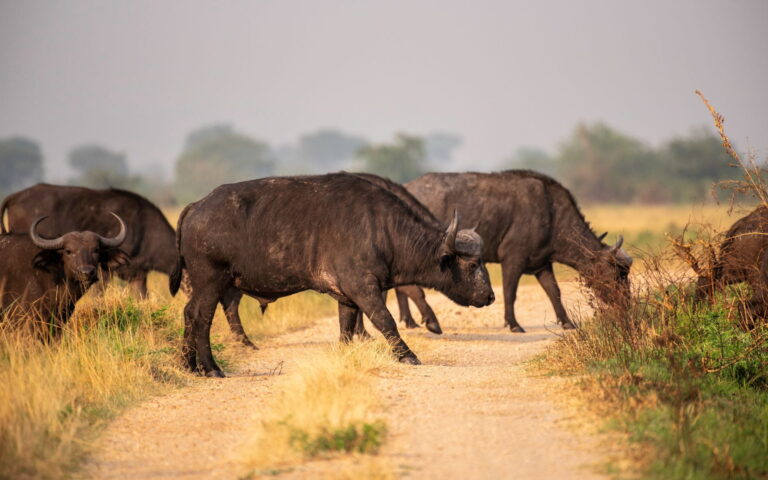
What makes birdwatching in the Serengeti unique is the context. You are watching birds in a landscape teeming with other wildlife. A martial eagle perched in a sausage tree might be watching the same herd of zebras that you are watching. A yellow-billed oxpecker hitches a ride on a buffalo’s back, picking ticks from its hide. The birds are not separate from the safari experience. They are woven into it.
Ngorongoro Crater offers concentrated birdwatching in a contained area. The crater floor includes a soda lake, Lake Magadi, which attracts flamingos when water levels are suitable. The lake also draws other waterbirds, including avocets, stilts, and various species of plovers. The Lerai Forest, a stand of yellow-barked acacias, hosts hornbills, turacos, and barbets. The swamps support herons, egrets, and the spectacular crowned crane, Uganda’s national bird but common here as well.
Tarangire National Park is often overlooked by birdwatchers, but it should not be. The park’s baobab trees provide nesting sites for several species, including the yellow-collared lovebird, a small green parrot with a bright yellow collar. The Tarangire River draws birds throughout the dry season, creating concentrations that are easy to observe. More than five hundred species have been recorded in the park.
Lake Manyara National Park, despite its small size, boasts an extraordinary bird list of more than four hundred species. The alkaline lake supports thousands of flamingos when conditions are right. The groundwater forest, fed by springs from the Rift Valley escarpment, hosts forest species that are difficult to see elsewhere. Pelicans, cormorants, and storks gather along the lake shore. The park is also one of the best places in Tanzania to see the crested guinea fowl, a striking bird with a curly black crest.
For dedicated birdwatchers, the Eastern Arc Mountains are essential. Amani Nature Reserve in the Usambara Mountains protects forest habitat for several endemic species, including the Usambara eagle-owl and the Usambara akalat. Udzungwa Mountains National Park, which can be reached from Mikumi through roads, has two species namely the Udzungwa forest partridge and the rufous-winged sunbird. However, reaching these parks requires more effort compared to the northern circuit parks although it is highly rewarding for bird watchers.
Wilderness bird watching can be done in the southern parks of Ruaha and Nyerere. Ruaha supports more than five hundred species, including several that are rare elsewhere. The park is particularly good for raptors, with numerous eagles, hawks, and vultures present year-round. The great white pelican gathers on the Rufiji River in Nyerere, creating a spectacle that rivals any mammal sighting.
Endemic and Specialty Birds.
Serious birdwatchers travel for endemics, species that occur in only one country or region. Tanzania claims approximately thirty endemic species, plus several near-endemics shared only with neighboring countries. This is a remarkable number for an African nation.
The Udzungwa forest partridge is perhaps the most sought-after. This ground-dwelling bird lives in a handful of forests in the Udzungwa Mountains and is notoriously difficult to see. It is seldom seen flying and will prefer running on the forest floor, freezing at any hint of danger using its camouflage-like feathers to escape being spotted. It takes both luck and knowledge about it to find this bird.
Other Tanzanian endemics include the Usambara eagle-owl, a large owl with striking orange eyes; the Pemba scops-owl, found only on Pemba Island; and the Loveridge’s sunbird, a jewel-like bird restricted to the Eastern Arc Mountains. The rufous-winged sunbird and the Banded sunbird are also endemic to Tanzania’s mountains.
Near-endemics shared with Kenya include the William’s lark, the Karamoja apalis, and the Pangani longclaw. These species are difficult to see outside the border region, making Tanzania the best place to find them.
Practical Considerations for Birdwatching in Tanzania.
Birdwatching safari in Tanzania requires different planning than a standard mammal-focused safari. Begin by finding a guide with bird watching experience. While most safari guides may be able to recognize common birds, a bird watching guide will have additional experience in calls and habitat that will allow you to locate rare endemic species.
Second, bring appropriate equipment. A good pair of binoculars is essential. For birdwatching, eight-power or ten-power binoculars with a wide field of view work best. A spotting scope on a tripod allows closer observation of distant waterbirds. A field guide to East African birds is useful for confirming identifications and noting species seen. Several excellent guides are available, including the Stevenson and Fanshawe guide, which is considered the standard.
Third, adjust your expectations for timing. The best birdwatching is often in the early morning, when birds are most active and vocal. You will need to be on the road before sunrise, just as you would for mammal viewing. Late afternoon is also productive. Midday is quieter, as birds rest in the shade and avoid the heat.
Bird watching is easier during the dry season when the vegetation is sparse, and the birds gather near water holes. During the rainy season, many species migrate and there is abundant vegetation that makes it difficult to spot the birds.
Bird Watching and Traditional Safaris.
Most people who come to Tanzania for bird watching do not only look at the birds. They want to see the mammals as well, and the two activities complement each other naturally. While your guide searches for lions and elephants, you can scan the trees and sky for birds. While waiting for a leopard to emerge from cover, you can study the weavers building their nests nearby.
The key is communication. Tell your guide that birdwatching is important to you. A good guide will stop for interesting birds even while searching for mammals. Some safari operators focus exclusively on bird-watching safaris and may be able to create a schedule that will ensure the maximum number of bird and mammal sightings. Such safaris tend to be less fast-paced than regular safaris.
In conclusion; Tanzania is not only good for birdwatching safaris. It is exceptional. The combination of habitat diversity, endemic species, and migratory populations creates a birdwatching destination that rivals South Africa and Kenya. The country’s more famous mammals may draw you to Tanzania, but the birds will keep you watching long after the lions have lain down to sleep. Pack your binoculars, bring a good field guide, and prepare to be surprised. The eleven hundred species of Tanzania are waiting to be discovered. Contact us for bookings.