
How to conserve mountain gorillas in Uganda.
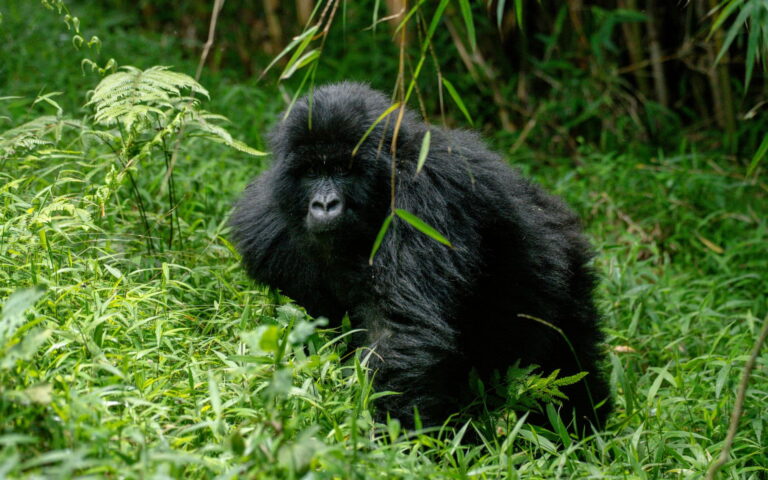
Uganda’s mountain gorillas have gone from fewer than 300 individuals across Rwanda, Uganda and Democratic Republic of Congo in 1990 to 1,063 as of the latest figures announced at Uganda’s national World Gorilla Day celebrations on October 2, 2026, with 459 of those gorillas now living in Bwindi Impenetrable National Park alone. That recovery didn’t happen by accident, and it didn’t happen through a single intervention. It’s the product of a deliberate, multi-layered conservation model combining habitat protection, anti-poaching enforcement, veterinary care, tourism revenue, and genuine community involvement, a model Uganda has refined over more than three decades and one still actively evolving today.
Habitat Protection as the Foundation.
Everything else in Uganda’s gorilla conservation strategy rests on protecting the forest the gorillas actually live in. Bwindi Impenetrable National Park and Mgahinga Gorilla National Park together hold Uganda’s entire gorilla population, and both are managed under strict legal protection as national parks, with boundaries enforced by the Uganda Wildlife Authority to prevent encroachment from agriculture, logging, and settlement expansion.
This protection matters more than it might first appear, since mountain gorillas require specific, undisturbed high-altitude forest habitat to survive, and habitat fragmentation remains one of the clearest long-term threats to the species even as overall population numbers trend upward. Maintaining forest corridors between gorilla ranges, particularly across the porous borders shared with Rwanda and the DRC in the Virunga region, also matters for genetic diversity, since isolated, disconnected gorilla groups face a greater risk of inbreeding over time.
Anti-Poaching Enforcement and Ranger Presence.
Uganda’s gorilla parks are patrolled by a substantial, dedicated ranger force, with roughly 1,000 rangers working across Bwindi and Mgahinga under the Uganda Wildlife Authority and supporting organisations. These rangers conduct regular patrols specifically targeting snares, which remain one of the most persistent dangers to gorillas, since snares set for other bushmeat species can injure or kill gorillas who stumble into them even when they aren’t the intended target.
Dedicated “no-snare zone” initiatives around Bwindi have reportedly cut snaring incidents significantly in the areas where they operate, and strict legal penalties, including lengthy prison sentences for poaching offences, back up the on-the-ground patrol work with real legal consequences for anyone caught targeting protected wildlife.
Veterinary Care for a Genuinely Fragile Population.
Because mountain gorillas share such close genetic similarity with humans, they’re vulnerable to human-borne respiratory illnesses in a way few other wildlife species are, and Uganda’s conservation model includes dedicated veterinary monitoring to catch and treat health problems before they spread through a family group.
Organizations working alongside the Uganda Wildlife Authority monitor habituated gorilla families for signs of illness or injury, intervening with treatment, when necessary, a level of hands-on veterinary care that would be impractical, and arguably inappropriate, for most wild animal populations but has become essential given how precarious gorilla numbers remain despite recent growth.
This veterinary layer works alongside the tourism-related health rules every trekker encounter, mandatory mask-wearing near gorillas, minimum distance requirements, and pre-trek health screening to turn away visitors showing cold or flu symptoms, all designed to minimize the risk of disease transmission from the thousands of tourists who visit each year.
Tourism Revenue as a Conservation Engine.
Gorilla trekking permits, priced at $800 for Uganda’s standard trek, fund a substantial share of the country’s gorilla conservation infrastructure directly. A significant portion of permit revenue flows into park management, ranger salaries, and research, while a separate allocation goes specifically toward community development projects in the districts surrounding Bwindi and Mgahinga.
This arrangement does something conservation efforts focused purely on enforcement struggle to achieve: it gives gorillas measurable, direct economic value to the people living closest to them, reframing gorillas from a potential threat to crops and livelihoods into a genuine source of income through trekking fees, porter work, craft sales, and tourism-related employment.
Community Involvement as the Long-Term Strategy.
Perhaps the most significant shift in Uganda’s gorilla conservation approach over the past three decades has been the move away from a purely enforcement-focused model toward one that actively invests in the communities bordering gorilla habitat.
This means education support, healthcare access, sustainable agriculture programs, and direct involvement in tourism-related employment for households living near the parks, an approach built on the understanding that communities who genuinely benefit from gorilla conservation are communities with a real incentive to protect it, rather than communities who see the forest’s protection purely as a restriction on their own land use.
Officials have specifically credited this community engagement with contributing to the population increase confirmed at this year’s World Gorilla Day celebrations, noting that revenue-sharing and livelihood investment have measurably shifted local perceptions of gorillas from threat to asset.
A New Challenge: Illegal Gorilla Trekking.
Despite the genuine success reflected in the population numbers, Uganda’s conservation officials used this year’s World Gorilla Day celebration to raise a newer concern: illegal, unregulated gorilla trekking occurring outside the official permit system in the Kigezi region. Officials warned that some individuals and conservation partners have reportedly facilitated irregular tracking activity, undermining both the conservation model and the tourism revenue system that funds it.
This is a reminder that even a genuine conservation success story requires ongoing vigilance, since unregulated human contact with gorillas bypasses the health screening, distance rules, and controlled group sizes that make the official trekking system safe for the gorillas in the first place, reintroducing exactly the disease and disturbance risks the formal system was built to manage.
Climate Change and Emerging Pressures.
Beyond poaching and disease, Ugandan wildlife officials have also flagged climate change as a growing, longer-term pressure on gorilla habitat, affecting vegetation patterns and food availability within the forest ecosystems gorillas depend on. This threat operates on a different timescale than poaching or disease outbreaks, but conservation planning increasingly has to account for how shifting rainfall and temperature patterns across southwestern Uganda’s highland forests might affect gorilla habitat suitability over the coming decades, adding a layer of complexity to a conservation model that has, until now, focused primarily on more immediate, directly manageable threats.
Conclusion; Uganda’s mountain gorilla conservation success, nearly half of the world’s 1,063 remaining mountain gorillas now living within its borders, stands as one of the clearer proof points that sustained, multi-layered conservation work genuinely moves the needle for an endangered species. Habitat protection, anti-poaching enforcement, veterinary care, tourism-funded park management, and deep community investment have each played a distinct, necessary role in that recovery, and none of them would have been sufficient alone. The emergence of new challenges, illegal tracking outside the regulated system and the slower-moving pressure of climate change, makes clear that this success remains a work in progress rather than a finished achievement, and that continuing to protect Uganda’s mountain gorillas will require the same combination of enforcement, funding and community partnership that got the population this far in the first place.