
Which best national parks to visit in Tanzania.
Tanzania is, without question, one of the greatest wildlife safari destinations on earth. Its national parks do not merely protect animals they preserve entire ecosystems, ancient landscapes, and a natural heritage of profound global significance. Tanzania protects approximately 38 percent of its total land area through a network of national parks, game reserves, and conservation areas a statistic that reflects a national commitment to wildlife preservation that is unmatched anywhere on the African continent. With 22 national parks covering some of the most biodiverse and dramatically beautiful landscapes on earth, the challenge for the first-time visitor is not finding somewhere extraordinary to go it is deciding where to begin.
This guide presents the finest national parks Tanzania has to offer in 2026, organized to help every type of traveler from the first-time safari-goer to the seasoned wildlife enthusiast plan a journey that is as informed as it is unforgettable.
1. Serengeti National Park.
No list of Tanzania’s best national parks can begin anywhere other than the Serengeti. Covering nearly 15,000 square kilometers of open savannah, acacia woodland, and riverine forest in northern Tanzania, the Serengeti is the most celebrated wildlife destination on the continent and the stage upon which the legendary Great Migration unfolds year-round.
Approximately 1.5 million wildebeest, accompanied by hundreds of thousands of zebras and Thomson’s gazelle, move continuously across the ecosystem in response to rainfall and grass growth a cycle that has continued uninterrupted for over a million years. Calving season between January and March on the southern plains is among the most extraordinary wildlife events on earth, while the dramatic river crossings at the Grumeti and Mara rivers between June and October draw visitors from every corner of the world.
Beyond the migration, the Serengeti offers outstanding Big Five game viewing year-round. Its lion population is one of the largest and most studied in Africa, its leopard sightings frequent, and its cheetah encounters among the most reliable on the continent. For the traveler seeking the definitive Tanzania safari experience, the Serengeti is not optional it is essential.
2. Ngorongoro Conservation Area.
Ngorongoro Crater is one of the natural wonders of the African continent and, by a significant margin, the most extraordinary game viewing arena anywhere on earth. Formed from the collapsed caldera of an ancient volcano, this 260-square-kilometre enclosure shelters the densest concentration of large mammals on the planet all contained within walls of volcanic rock that rise 600 metres above the crater floor.
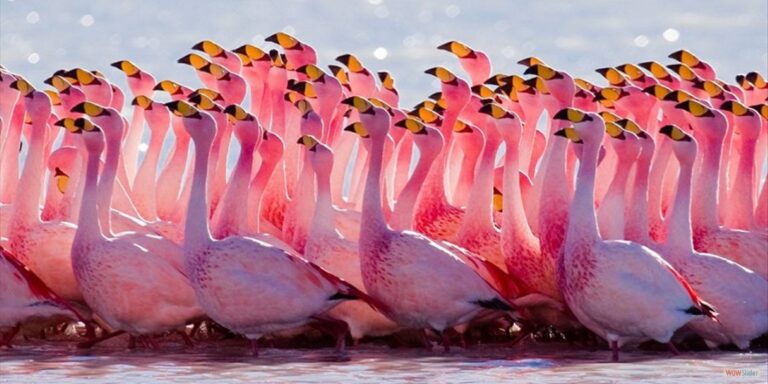
Lions, elephants, hippos, hyenas, wildebeest, zebra, flamingos, and the critically endangered black rhinoceros share the crater floor in a concentration that makes wildlife encounters almost effortless. The crater is home to an estimated 25,000 large animals at any given time, and game drives here produce sightings of a quality and frequency that even the most experienced safari-goers find genuinely remarkable.
Ngorongoro Conservation Area is also home to Olduvai Gorge, which is considered one of the most significant paleoanthropological sites on earth due to the presence of fossils of some of the earliest human beings ever recorded, thus providing it with a very significant historical aspect apart from its natural beauty.
3. Tarangire National Park.
Tarangire National Park is arguably one of the best and least appreciated parks in Tanzania, consistently offering great animal viewing opportunities while only attracting a small percentage of the visitors drawn to the northern safari circuit parks.
Tarangire National Park features the world-renowned giant baobab trees, which can be described as alien-like, towering giants, and the amazing elephant herds. The park is home to some of the highest numbers of elephants in East Africa, with herds comprising up to 300 animals assembling at the Tarangire River from June to October.
Apart from elephants, Tarangire boasts significant numbers of lions, leopards, cheetahs, buffalos, giraffes, zebras, and an abundance of bird species. For the traveler seeking a Tanzania safari with genuine depth and without the crowds, Tarangire is one of the finest choices available.
4. Ruaha National Park.
Ruaha National Park in southern Tanzania is, by area, the largest national park in the country and arguably its most rewarding for the visitor willing to make the journey south. Covering over 20,000 square kilometers of remote, rugged, and largely untouched wilderness, Ruaha offers an adventure travel experience of a quality and authenticity that its more famous northern counterparts can no longer entirely provide.
The wildlife here is exceptional. Ruaha supports one of the largest lion populations in Africa, significant populations of wild dog one of the continent’s most endangered predator’s elephant herds numbering in the thousands, and large concentrations of buffalo, giraffe, zebra, and kudu. The landscape itself, characterized by the Great Ruaha River, ancient baobab forests, and open miombo woodland, is among the most visually striking in all of Tanzania.
Because visitor numbers remain relatively low, game drives in Ruaha frequently involve long stretches of wilderness without another vehicle in sight a rarity in the modern safari world that many experienced travelers consider the park’s single greatest attribute.
5. Selous Game Reserve.
Formally renamed the Nyerere National Park in honor of Tanzania’s founding president, the Selous is the largest protected wildlife area in Africa and a UNESCO World Heritage Site of immense ecological significance. Covering over 50,000 square kilometers of southern Tanzania, it is a wilderness of a scale that is genuinely difficult to comprehend.
Selous offers a distinctive and highly rewarding safari experience built around the Rufiji River one of East Africa’s great waterways, whose banks support extraordinary concentrations of hippos, crocodiles, elephants, and a remarkable diversity of birdlife. Boat safaris along the Rufiji provide a perspective on the African wilderness that no land-based game drive can replicate, drifting silently past hippo pods and elephant families bathing in the shallows.
The walking safaris accompanied by armed game wardens, fly camping amidst nature within the clearings of the wild, and fishing trips along the river make the Selous even more diverse as an eco-tourism destination in East Africa.
6. Mahale Mountains National Park.
The tourist looking for an alternative safari adventure away from the standard game drive will find something truly unique at Mahale Mountains National Park, located on the east coast of Lake Tanganyika the chance to walk into the deep jungles to track the resident groups of chimpanzees.
Access to the park can be gained through boat trips or chartered flights, which guarantees that the number of visitors is minimal and the whole experience will remain intimate and authentic because it can easily get diluted due to the influx of tourists. Being in proximity of the chimpanzees in the Mahale Park and watching them interact, use tools, and display very human behaviors is an extremely enriching wildlife experience.
The lakeshore of Lake Tanganyika, which is the second-deepest lake in the world as well as the second-oldest, makes for a spectacular and tranquil setting for the trekking adventure with its clear waters providing excellent snorkeling and swimming in one of the cleanest bodies of fresh water in Africa.
7. Gombe Stream National Park.
Gombe Stream National Park is special in terms of both conservation and science. It was here, beginning in 1960, that the legendary primatologist Jane Goodall conducted the pioneering research into chimpanzee behavior that fundamentally altered humanity’s understanding of the relationship between humans and other primates.
Tanzania’s smallest national park, Gombe is also one of its most historically significant. Hiking through the forests in search of the chimpanzees that have been studied for many years is a process steeped in the glory of the remarkable scientific heritage, and one that reminds us that often the greatest scientific discoveries are not made in labs, but out in nature itself.
Planning for a Tanzania National Park Safari in 2026.
The best period to visit the national parks in Tanzania is during the dry seasons from June through October and from January to February, since this is when the animals are most concentrated and the chances of spotting them will be better. A combination of visiting the Serengeti, Ngorongoro, and Tarangire parks should be undertaken in a trip of ten to fourteen days, whereas the Ruaha and Selous parks should each have a minimum of four to five days.
For the discerning traveler who has enough time and energy and truly loves nature, there is no safari destination anywhere on Earth like Tanzania’s. With its amazing range, variety, and depth, Tanzania’s safari experience will delight and inspire everyone.