

How Hot Is Tanzania During Safari Season?
A question that lingers in the minds of most first-time safari travelers is about the heat. Will the African sun be unbearable? Will afternoon game drives feel like sitting in an oven? The answer, reassuringly, is more nuanced than a simple yes or no. Tanzania’s climate is not a single, uniform temperature. It varies significantly depending on where you are, what time of year you visit, and even what time of day you head out on a game drive.
Understanding the heat is essential for packing appropriately and planning your daily schedule. This guide provides a formal, month-by-month breakdown of temperatures across Tanzania’s main safari regions, helping you know exactly what warmth to expect.
The General Climate: Not a Uniform Heat.
It is a common misconception that all of Africa is scorching hot all the time. In Tanzania, altitude plays a massive role in your comfort. While the coastal areas near Dar es Salaam and Zanzibar are indeed tropical, humid, and consistently warm (averaging 28°C to 32°C / 82°F to 90°F), the northern safari circuit tells a different story.
Serengeti and Ngorongoro Highlands sit at significant altitudes. Because of this elevation, the climate here is remarkably temperate. Daytime temperatures rarely exceed the high twenties Celsius, and nighttime temperatures can drop significantly, requiring a fleece or jacket during early morning drives.
The Dry Season (June to October): Warm Days, Cool Nights.
The dry season is widely considered the best time for wildlife viewing, but what does the thermometer say? During these months, the skies are clear, and humidity is low. Daytime temperatures are pleasant, typically ranging from 22°C to 27°C (72°F to 81°F). However, the key feature of the dry season is the drastic temperature drop after sunset. On the high plains, nights and early mornings can be surprisingly cold, with temperatures falling to 10°C to 15°C (50°F to 59°F).
If you are traveling in June, July, or August, you will need warm layers for your 6:00 AM game drive. The sun quickly warms the day, but the chill returns as soon as the sun dips below the horizon. This contrast is one of the most surprising aspects for visitors expecting tropical heat.
The Wet Seasons (March to May and November to December): Humidity and Heat.
The “Green Season” offers a different type of warmth. While there is more rain, the temperatures are actually higher than in the dry season. From November to December (Short Rains) and March to May (Long Rains), expect daytime highs ranging from 26°C to 30°C (79°F to 86°F).
The main difference here is humidity. The rains make the air heavier and stickier than during the bone-dry winter months. While April is usually the wettest month, it is also one of the warmest. Although the sun might be hidden behind clouds, the thermal heat can feel more intense than the clear skies of July.
The “Summer” Months (December to February): The Hot Spell.
If you want the hottest weather, plan a safari between December and February. This period is known as Tanzania’s “summer”. During these months, the short rains have usually cleared, leaving behind green landscapes and higher temperatures.
Expect average daytime highs to reach 29°C to 33°C (84°F to 91°F). In places like the Serengeti and Ngorongoro, the afternoons can feel quite hot. However, because the air is often dry rather than humid, the heat is often more tolerable than the sticky warmth of the long rains. This is the peak time for the wildebeest calving season, and the warm, stable weather makes for excellent photography conditions.
The Northern Circuit vs The Coast.
Northern Circuit (Serengeti National Park, Ngorongoro Conservation Area): It has been observed that the altitude guarantees mild temperature. July is actually the coolest month, with average highs around 21°C (70°F). February is usually the warmest month of this area, reaching almost up to 30°C (86°F).
Coast/Zanzibar Area: This place has plenty of hot beach locations. It’s hard for this place to go below 25°C (77°F), whereas the weather here normally goes above 32°C (90°F). But it will not have the same humidity in the dry season.
Practical Tips for Managing the Heat.
Given these temperatures, packing correctly ensures your comfort.
Layer Up for Mornings: Regardless of the season, early mornings on the crater rim or the Serengeti plains are cold. A fleece, windbreaker, or light down jacket is non-negotiable, even in the summer.
Choose Light, Comfortable Fabrics: Cotton or linen fabrics in khaki, beige, or olive shades will ensure that you stay comfortable when temperatures peak at noon. Do not choose dark or bright clothing that may attract wild animals.
Body Protection: The rays of the equatorial sun are intense. High-SPF sunscreen lotions, polarized glasses, and wide-brimmed hats must be used, even on cloudy days. Although it may be comfortable, the ultraviolet rays are harmful.
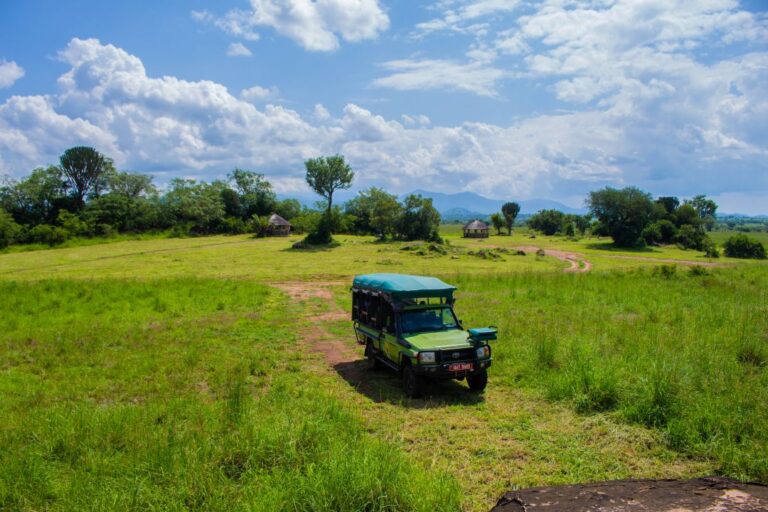
The vehicles used for safaris are usually equipped with the best view. They have pop-up roofs and large windows. This can help capture photographs easily, but you will have to bear the ambient temperature. Guides will usually drive with the breeze in mind, but staying hydrated is vital.
In conclusion, all the tourists visiting Tanzania will experience warmth but not excessive heat. The time when the safari season happens, which occurs between June and October, whereby the temperature is relatively warm in the day and cold at night, would be the ideal time to visit the country because the weather is pleasant compared to that in the north. However, if one prefers a slightly warmer climate, they should consider visiting in calving season.
For more information that may wish to know about the different safaris done in Tanzania, to the popular safari destinations like Serengeti National Park, Ngorongoro Conservation Area, Lake Manyara National Park, Tarangire National Park, and among many others. Immediately contact us at WildApes Safaris, and our safari specialists will help you plan and then prepare for you a wonderful safari itinerary that will bring your safari dream to a reality.