
Why is Rwanda gorilla trekking expensive than Uganda gorilla trekking.
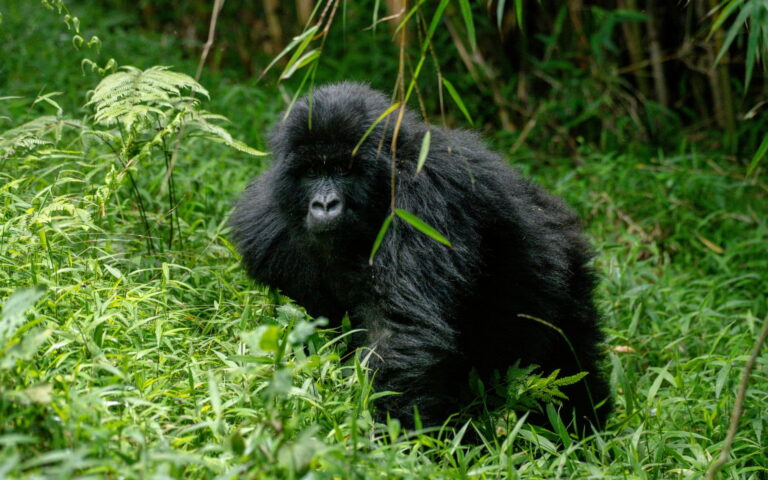
Rwanda gorilla trekking vs Uganda gorilla trekking. Gorilla trekking is the incredible moment in time that the one-on-one hour people enjoy with one of the world’s most vulnerable species when they do gorilla trekking, the pinnacle of an African safari. The travelers who start planning for this incredible adventure notice fast a list of obvious differences in price between two most desirable destinations: Rwanda and Uganda. Specifically, the one that this variation represents as to the cost of the permit is that in Rwanda it costs $1,500 USD while in Uganda it costs $800 USD. The $700 difference in the cost of the permits is not random as it is the chosen policy of set by the government, its logistical efficiency, and the country’s branding that are the main reasons behind this price gap. Knowing and understanding this differentiating factor is very important in order to make a choice of the country that fits your travel style and budget.
1. High-Value, Low-Volume Tourism Strategy.
The leading cause of the major rise in price of Rwanda’s permit is a change in policy that was significant and made by the Rwanda Development Board (RDB) in 2017. Originally, the Rwandan per, was not as high as the Ugandan permit prior to the price increase. Rwanda, by making the price go from $750 up to $1,500 in no time, signaled their commitment to a tourism strategy of high-value nature but low volume one. The government decided that they only wanted to attract tourists who were ready to pay a much higher price, luxury ones, in particular, the less price-sensitive ones, who are typically known to spend a lot of money on accommodation, extensions, and local services.
To achieve this strategy, a number of very important tasks are performed at the same time. Taking one customer group as desired, the government used the high price for creating a controlled environment that is safe for both the gorilla families and the full ecosystem of the national park in which the rainforest is located. Moreover, lower human disturbance means lower potential for erosion, since people will only be present on a restricted trail, and the risk of disease transmission will also be lower. Apart from that, registering many trekkers in Rwanda would be equivalent to the same revenue or even more as that in Uganda, despite the few visitors the country will be hosting. In the process of reaping maximum monetary return from a minimum of disturbance, Rwanda will market itself as a select one for the gorilla encounter in the world and thus render the seemingly big premium price logical and acceptable.
2. Superior Logistical Efficiency and Accessibility.
A limitation on the number of both vehicles and the number of people visiting allows the complicated road network in the protected areas in Rwanda not to get congested which therefore prevents them from being destroyed. Besides, the aim of the government is to have a National Park that perfectly illustrates to the world the country’s willingness and ability to protect its unfragmented biodiversity, which is still thriving here. The infrastructure set up by the government not only meets the goal of the responsible and wise production of energy from the park but also supports regular conservation teaching.
3. The High-Quality Accommodation Place Ecosystem
Rwanda’s dedication to premium tourism goes much further than just the permit, thus resulting in an entire luxury ecosystem that not only is a necessity but also a desire of the tourist that indirectly makes the safari in Rwanda more expensive. Due to the government’s indication of the major part of $1500 through the local tourism industry, as a respond, the ultra-lavish lodges were built. Properties of One&Only Gorilla’s Nest or Singita Kwitonda Lodge are the top, world-class, five-star residences, which are usually charging from $1,500 to $3,000 per night.
In reality, these highly luxurious hotels and the high permit price behind them for sure make perfect matches for attracting the visitors. When a traveler goes on vacation to Rwanda, they have a natural requirement to be in the most comfortable surroundings and will undoubtedly spend a lot more compared to Uganda, where a mix of accommodations is more commonplace. Even if Uganda does have very luxurious alternatives, it does not forget about the full range of mid-range and budget lodges ($150-400 per night) that whereas giving the flexibility that Rwanda’s market has long-sanitized to keep the premium brand image.
4. Conservation Investment and Community Contribution
While the countries are both using the permit revenue for the sake of conservation, Rwanda is the one that is more focused on its financial input as a form of justification of the price. The $1500 charge has been able to create a huge conservation budget which has been put on ground leading to various activities like anti-poaching patrols, the performance of veterinary interventions, and the crucial research that will be essential in the expansion of the gorilla population.
The main thing here is that Rwanda has really done a great work of making the higher permit price the main resource to enable them to be able to give back in the society. It is clear that 10% of the revenue that is generated by every permit of $1,500 is committed directly to the Volcanoes National Park’s community development projects. These are funds that can be channeled to schools, clinics, and clean water for the neighboring people. Also, this regular cooperation with local inhabitants is the root of the conservation of wildlife in Rwanda, which will pave the way for future generations. Apart from just watching, tourists are contributing to the preservation of nature and thereby promoting a model based on renewable energy and environmentally friendly community engagement. As a result, the high cost is a clear-cut indication of the commitment to green development and sustainability which further strengthens the bond with the surrounding communities.
In conclusion, while Uganda offers the same enjoyment and comes with the same satisfaction of time with the gorillas for much less payment of $800, Rwanda’s exclusive, convenient, and fast luxury safari experience is included in the all in one, $1500 price. The bottom line is that the very final decision lies entirely on the traveler’s own priorities: Uganda by all means becomes a more affordable and time-efficient value for the gorilla experience, while Rwanda provides a more organized, orderly, and high-end gorilla trekking safari with WildApes Safaris.