
What is gorilla trekking experience.
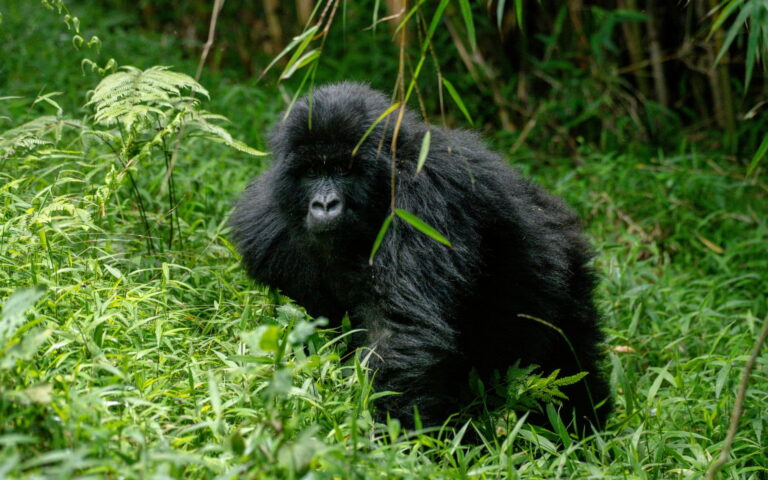
Gorilla Trekking safari experience is considered to be one of the most spectacular experiences to have with wildlife upon this planet. This experience is an adventure safari, where you are taken on a guided hike through steep and dense rainforest to see a troop of endangered Mountain Gorillas within their environment and habitat. It is upon neither a simple walk through a zoo nor an easy excursion, but rather an unbelievably intimate and taxing experience that will reward you with an experience that has been established based on the guidelines of the World Association of Zoos and Aquariums (WAZA) and by authorities in the area, and is about 98% like us in terms of DNA. This excursion can only be completed at four national parks located in three countries, which include Uganda (Bwindi Impenetrable and Mgahinga), Rwanda (Volcanoes), and the Democratic Republic of Congo (Virunga). It is designed to limit human impacts and help with the protection of gorillas through structured processes and guidelines.
The day you go on the trek: Logistics and Preparation.
The process of Gorilla Trekking is a carefully planned series of events that begins before you step foot on the muddy path.
Morning briefing and allocation.
After you arrive at the national park at about 7:00 AM, you will have an opportunity to receive a briefing on the gorilla trek and receive your briefing, as well as your guide and the group you will be hiking with. Each of the trekkers will attend a required briefing with park rangers and wardens. This informational meeting will provide information about the historical background of the gorillas, why preserving the wildlife is critical, and, most importantly, the rigorous safety and ethical rules that should be adhered to during the trek. The trekkers will break out into groups, limited to a maximum of eight people, for each gorilla family. The groups are assigned through careful consideration of each trekker’s self-identification of their level of fitness, and based on this, the guides select which families will be hiked to for each group based on proximity or the anticipated level of difficulty requiring longer, strenuous hikes. The use of a local porter is highly encouraged since it not only reduces the physical exertion of carrying a backpack on a hike, but provides a much-needed source of income for the local community(s).
The search and The Hike.
After the briefing, one of the groups will begin driving to the nearest trailhead to begin their hike. The duration and difficulty of the hike can vary widely, depending on the length of time spent looking for gorillas and their location relative to where the trekkers will start their hike. First thing in the morning, experienced trackers will set out to locate where the gorilla family that has become accustomed to human interaction slept the previous evening, and also determine where this family will move during the day in search of food. Depending on the gorillas’ distance from the trekkers, the trek can take anywhere from thirty minutes to eight hours to complete. Steepness, slippery surfaces and mud are all part of the ruggedness of mountain trekking for moderate to extreme physical fitness. Rangers/Guides will lead participants through dense jungle foliage often with Machete in hand. The reward after overcoming these constant physical challenges is the meeting with the gorillas.
Golden Hour.
This is the hour you will first see your gorilla while hiking on the path your guide or ranger previously cleared.
Sixty Minute Limit.
Once you get to the gorilla family the clock will start to tick down. Once again this is the first time you will see these majestic animals and the very first time you actually see them will be during the first hour. After arriving at the given time limit, you will be watching an entire family unit: the dominant silverback watching over everything; the female gorillas feeding and grooming each other, the young juveniles climbing and wrestling with their siblings and interacting with each other, like any curious animal. The time you get to spend watching this incredible family of gorillas up close and personal is a truly humbling and life-changing experience.
Rules for Responsible viewing.
The ethical and moral standards established by the park authorities are firm and non-negotiable and relate directly to the health and safety of both humans and gorillas, with the following rules:
1. Maintain distance; You must maintain a minimum distance of seven meters (23 feet) at all times from gorillas, although juvenile gorillas may approach closer out of curiosity.
2. No Flash Photography; Flash photography is prohibited because it may startle or provoke gorillas.
3.Speak Softly and be Submissive; You must speak quietly to one another and avoid any quick movements around the gorillas. In the event that a silverback charges you (this is typically a mock charge), stay calm, look down and follow what your guide directs you to do (act submissively) and do not run away.
4.No Eating or Drinking: The gorillas are at high risk of becoming infected from humans; it is strictly prohibited to eat, drink and smoke around them so that they do not catch anything from you.
Conservation and Legacy.
Gorilla trekking is more than just a fun tourist activity; it is the foundation for all efforts made to save mountain gorillas.
Funding conservation success.
The money you pay for your gorilla permit ($800 in Uganda and $1,500 in Rwanda) is used for continuous monitoring, protection, and habitat preservation for the critically endangered mountain gorilla. The money generated from permits has helped the population of mountain gorillas recover from extinction, and it is now known as one of Africa’s few conservation success stories. Additionally, a portion of the costs associated with gorilla permits is given to local people living around the national parks and encourages them not to engage in poaching and deforestation of gorilla habitat.
A lasting impression.
After an incredible hour spent watching mountain gorillas, the trekkers return to the park headquarters in silence. At the end of their trek, most guests will receive a certificate of completion that acknowledges their support for the gorilla conservation initiative. The gorilla trekking experience serves as a vivid reminder of how thin a line is drawn across our planet between eco-tourism and environmental demise. The exhaustion brought on by navigating the trail vanishes but is replaced by the vivid emotional experience of gazing into the eyes of one of Earth’s most amazing and brilliant species.