
Kwita Izina, Rwanda’s Gorilla Naming.
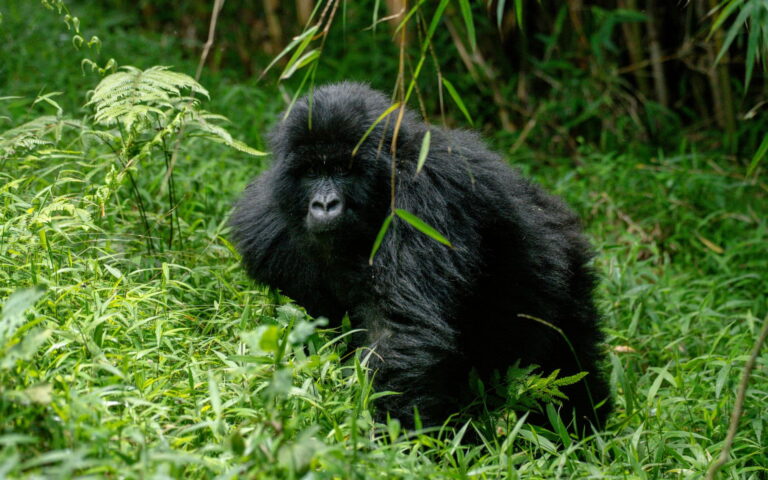
On a Rwanda safari, Every September and on (4th Friday September 2026) something quietly remarkable happens on the slopes of the Virunga volcanoes in northwestern Rwanda, that is Rwanda’s gorilla naming. Thousands of people government ministers and village farmers, international celebrities and local school children, conservation scientists and first-time safari travelers gather in the open air at Kinigi to participate in a ceremony that has become one of Africa’s most powerful annual statements about the relationship between humanity and the natural world. They come to give names to newborn mountain gorillas. They come to Kwita Izina.
A Tradition Rooted in Rwandan Culture.
To understand why Kwita Izina carries the emotional weight it does, you need to understand where it comes from. Kwita izina in Kinyarwanda, which is the official language of Rwanda, means “giving names.” This term applies to a very old Rwandan cultural tradition in which newborns are officially named in a ceremony that involves family members, community members, and clan elders. This tradition of naming goes beyond mere administration; it is a rite of acceptance into a community which takes responsibility for ensuring the child’s future well-being.
The decision by the Rwanda Development Board to use this particular Rwandan cultural tradition during the gorilla-naming ceremony in 2005 was intentional and significant. By extending the kwita izina ritual to newborn mountain gorillas, Rwanda made an explicit statement these animals are not wildlife statistics or conservation case studies. They are members of a community that Rwanda has chosen to name, to know individually, and to protect as a matter of cultural identity and national pride. That statement has grown more powerful with every ceremony since.
How the Ceremony Works.
Kwita Izina ceremony takes place annually in Kinigi, the gateway village to Volcanoes National Park, typically in September. The event draws thousands of attendees from across Rwanda and around the world, transforming the normally quiet highland town into a celebratory gathering of extraordinary cultural and conservation energy.
The morning begins with traditional Rwandan performances intore dancers in elaborate ceremonial dress, drummers whose rhythms carry across the hillside, and community choir performances that draw on Rwanda’s rich musical heritage. The atmosphere is genuinely festive, combining the solemnity of a cultural ceremony with the warmth and colour of a community celebration that has been building excitement for weeks.
The naming itself is the ceremonial centrepiece. Each newborn gorilla identified by the Dian Fossey Gorilla Fund’s monitoring teams in the preceding year is assigned a namer a prominent individual selected from Rwanda’s political leadership, its conservation community, its cultural institutions, or the international figures whose support for gorilla conservation has been meaningful and sustained. Each namer steps forward in turn, announces the name they have chosen for their gorilla, and explains the reasoning the quality the name honors, the hope it expresses, the story it carries.
Names chosen at past ceremonies reflect the full breadth of Rwandan values and the global conservation community’s engagement with the gorilla’s story. Names meaning strength, resilience, hope, and renewal appear repeatedly fitting qualities for animals whose population has pulled back from the edge of extinction through sustained human effort. Some names honor community members or conservation heroes. Others commemorate significant moments in Rwanda’s ongoing story of recovery and transformation.
The Numbers Behind the Celebration.
Kwita Izina is more than ceremony it is an annual accountability moment for one of conservation science’s most closely watched success stories. Since the first ceremony in 2005, hundreds of infant gorillas have been named across more than two decades of annual gatherings, each name representing a measurable addition to a population that was once considered beyond saving.
The mountain gorilla population in the Virunga Massif has grown from approximately 380 individuals when the ceremony began to over 600 today a recovery that conservation scientists describe as one of the most significant achievements in the history of wildlife protection. The global mountain gorilla population across both the Virunga and Bwindi now exceeds 1,100 individuals, making it the only great ape subspecies whose numbers are increasing rather than declining. Each infant named at Kwita Izina represents a data point in that recovery and a cause for genuine celebration.
The ceremony’s role in generating public awareness and international media attention for mountain gorilla conservation is itself a conservation tool. Named gorillas attract ongoing public interest in ways that anonymous population statistics never achieve. When a gorilla named at Kwita Izina is later photographed by a tourist, featured in a conservation update, or monitored through a health intervention, the name creates a human connection that sustains engagement, donations, and political will for the conservation programs that keep the population growing.
How Travelers Can Participate.
Kwita Izina has become an increasingly popular component of Rwanda gorilla safari itineraries, and for good reason. Attending the ceremony in combination with a gorilla trekking permit in Volcanoes National Park creates one of the most layered and emotionally complete Rwanda travel experiences available the scientific context of the conservation story, the cultural richness of the ceremony itself, and the raw wildlife encounter of the gorilla trek combining into a single journey of extraordinary depth.
The ceremony is a public event open to all visitors, though arriving early is essential as the venue fills rapidly with both local and international attendees. Gorilla trekking permits and lodge accommodation in the Musanze and Kinigi area during the Kwita Izina period book out significantly earlier than normal advance planning of six to nine months is strongly recommended for travelers intending to combine the ceremony with trekking.
Rwanda Development Board announces the official ceremony date each year through its website and through licensed Rwandan tour operators who can incorporate the event seamlessly into a broader Rwanda itinerary. Travelers who register as foster parents through the Dian Fossey Gorilla Fund before their visit gain additional access to conservation programming around the ceremony period that enriches the experience further.
Conclusion; Kwita Izina endures because it does something rare in conservation communication it makes the abstract personal. Population statistics and habitat loss percentages do not move people the way a name does. When a mountain gorilla infant receives its name on the slopes of the Virunga volcanoes in front of thousands of witnesses, it becomes an individual with a story, a community, and a future that the world has publicly committed to protecting. Rwanda understood this truth when it launched the ceremony in 2005, and twenty years later, with over six hundred mountain gorillas living in the Virunga and the population still growing, the wisdom of that understanding is written in every name that has ever been spoken at Kwita Izina.