
Is Uganda gorilla trekking permit cheaper than Rwanda gorilla trekking.
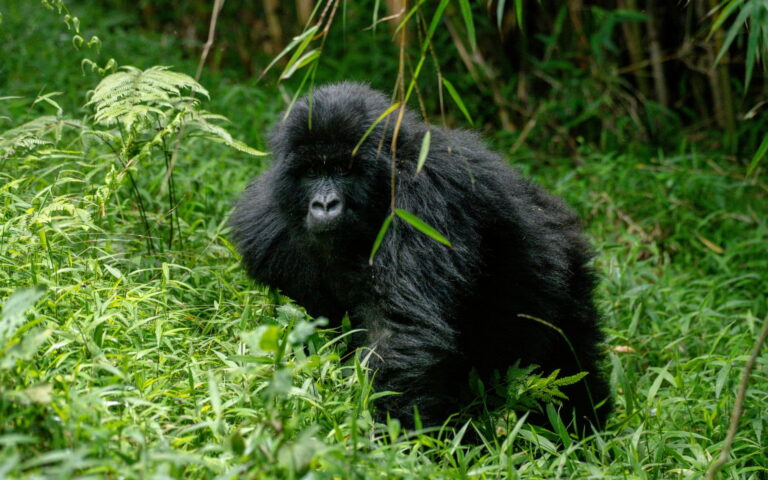
For the travelers dreaming on a gorilla safari currently, there are two main countries where travelers can have an opportunity to see and interact with critically endangered mountain gorillas in the wild; Uganda and Rwanda. Both countries provide this amazing opportunity within the majestic Virunga Massif and Bwindi impenetrable forests, but each country has followed a different approach to tourism thus creating a significant price difference between the two destinations. The answer is yes when comparing the cost of gorilla trekking in Uganda compared to Rwanda; however, to understand why there is a price difference you must look past the price of the permit and see the overall travel experience and logistics and conservation philosophy of each country.
Gorilla Trekking Permit Prices: The main difference.
Permit costs are the most significant item in your gorilla safari budget where the greatest difference between Uganda and Rwanda occurs.
Price Strategies by Uganda.
The Ugandan wildlife authority has taken a long-term approach to ensure that they maintain reasonable prices that attract different levels of travelling consumers while still generating enough money to support critical conservation efforts. Currently the price of a standard gorilla trekking permit for foreign non-resident visitors is $800. The pricing for the GEXP has been carefully introduced to balance affordability for many visitors and the financial support generated for conservation work and community development initiatives surrounding Bwindi and Mgahinga National Parks. Uganda has also developed an exclusive Gorilla Habituation Experience (GHEX), which allows for 4 hours with the gorillas vs. 1 hour. This experience is available at $1,500 USD.
Uganda’s Luxury Strategy.
In November of 2017, Rwanda made a deliberate and well-considered strategic pivot to an exclusive focus on high-end tourism. The price of a permit for all international visitors was increased dramatically from $750 USD to $1,500 USD. This was an exceptionally bold move on Rwanda’s part, as it established the country’s position as the best, and ultra-luxury safari destination for gorilla trekking. The high price tag was purposefully set at a level that would generate adequate funding for conservation work, permit Rwanda to limit visitor volume, thereby limiting the amount of direct interaction visitors have with gorillas, and to maximize financial revenue from every trekker who travels in to Rwanda for gorilla trekking. Therefore, the high permit cost is the main reason for doubling the costs of a four-day safari in Rwanda versus that of a similar safari in Uganda.
Logistics and Travel Costs – Indirect Expenses.
While permits are typically the largest expense incurred by trekkers who travel to Uganda for gorilla trekking, the overall costs associated with a safari will typically be affected more by logistical and travel time considerations, and accommodations, than by the permit cost. Due to the sheer size of Uganda, travel costs tend to be greater for safaris in Uganda than for safaris in Rwanda.
Rwanda’s Efficiency and Convenience.
Rwanda has an exceptional level of travel efficiency and convenience. The capital city, Kigali, and its airport (KGL) are located within a two-to-three-hour drive (on excellent paved roads) from Volcanoes National Park (the location of the gorillas). The travel efficiency of this region allows a tourist to complete a gorilla trek in two days, thereby eliminating travel days and reducing the total accommodation and travel costs associated with the gorilla trek. The travel ease and distance value of Rwanda helps to offset the high price of the permit that luxury travelers must pay for gorilla trekking in Rwanda.
Uganda’s Distance and Associated Costs.
While Uganda’s gorilla trekking parks (Bwindi and Mgahinga) are located in the far southwest region of the country, translating to a longer travel time from Kampala, the capital city, or Entebbe, the nearest international airport (EBB). Travelers typically either drive over two days (8 to 10 hours) or fly using a domestic scheduled flight to reach these parks. Driving is less expensive, but it incurs travel days and fuel/guide expenses for the return trip to the capital. A flight is the fastest option, but considerably increases the overall cost of the safari package. In summary, the shorter permit price for Uganda can be somewhat offset by the bringing in of additional days of accommodation and travel, which consequently reduce the costs between Uganda and Rwanda’s efficiency with the trek itself.
Accommodation and Safari Standards.
Accommodation prices in each country vary greatly depending on the respective countries’ tourism models, and therefore the price of a country’s safari will be affected by the country’s accommodation options as well.
Exclusive accommodation in Rwanda.
Rwanda’s exclusive accommodation is part of Rwanda’s high-value strategy, and many of these lodges rank among the most expensive and exclusive gorilla lodges in Africa, charging upwards of $2000 (USD) per person per night. These types of accommodation offer clients intricate architecture, tailor-made service and top-of-the-line amenities, primarily targeting clients for whom price is not a concern.
A More Varied Range of Options in Uganda.
In terms of accommodation, Uganda offers far more choices. There are certainly very high-end luxury lodges (some of which would be similar to the best gorilla lodges in Rwanda); however, Uganda also has huge numbers of excellent mid-range and budget lodges just a stone’s throw from the hiking trail heads. This allows clients to choose accommodations based on their budget, while still experiencing a comparable gorilla experience. A mid-range safari in Uganda can easily be half of what you would pay for a high-end safari in Rwanda, making Uganda a more budget-friendly choice for those trekking on a budget.
The Conservation and Community Benefits.
Regardless of the pricing, both countries place great importance on conservation and the community benefits of their tourism, so travelers can rest assured that their money is helping to conserve the species for future generations.
Community Benefits for Uganda.
Uganda provides 10% of the tourist fee (about 80% of the permit cost) to local communities living near national parks for improving schools and healthcare delivery systems. Local communities also benefit from the tourism and lower-cost safari employees created by the lower-cost safari sector (guides, porters, drivers). The employment from this sector is valuable to rural areas throughout Uganda.
Conservation Efforts for Rwanda.
Rwanda collects money from high-revenue permits and reinvests the money in specialized and expensive conservation efforts. In addition to the specialized high-level conservation efforts, Rwanda shares money from permits with local communities, creating many community development projects that ensure that gorillas are among the most protected species on Earth.
In conclusion, for travelers whose top priority is to find the lowest possible price for the gorilla experience, Uganda is cheaper than Rwanda by $800, as the permit fee to see a gorilla in Uganda is $800 versus $1,500 in Rwanda. Rwanda offers a much faster and easier experience compared to Uganda. However, once a traveler factors in the longer travelling times within Uganda, the difference in cost of the two permits becomes less significant. Therefore, the best choice for gorilla trekking without having to pay a highest price would remain Uganda.