


Is Bwindi Impenetrable national park safe for gorilla trekking.
Bwindi Impenetrable National Park in Uganda is one of the most crucial conservation areas on earth that is a home to almost half of the total world population of the Mountain Gorillas. The vast majority of visitors will only found trekking into the dense, remote jungle, which in turn prompts them to instantly think of security and safety. Well, the answer is that gorilla trekking safari in Bwindi is almost without danger, as a result of the strict safety measures put in place by the Uganda Wildlife Authority (UWA) and the solid history of conservation that has been going on for the past several years. Nevertheless, it is the knowledge of worry and problem free nature of the experience that really counts here and, obviously, access to the information of such measures taken for ensuring safety and health is just as important as that for physical security.
1.Political Stability and Armed Protection.
Uganda had been, for the better part of the last century, a politically stable country, and security has been its strong point not only in the towns, but also even in the forests and hills around the Bwindi. As a result, Tourism being the major source of the national income means that the gorilla trekking safari which is the main attraction, is of great interest for the government and thus it is readily assured that substantial resources are devoted to the protection of the area and its visitors.
Armed Rangers: In addition to the two highly armed (heavy weapons) rangers found in every trekking group males from the Uganda Wildlife Authority (UWA) handling the task of protecting the Sisters act together with UWA rangers or police units which are often found in the region, a third heavy armed person can be seen in the photos, but basically these two groups are heterogeneous but closely linked and the men work professionally with great cooperation intensity.
In which mostly scenes lead shyly patrol the specified areas to protect guests and wild animals, and it should have been like this and it is like this, although they unfortunately attack only them occasionally. Even though conflicts with humans or big ferocious animals get to the very minimum, this evidently closest possible risk is being prevented and at the same time freshmen get support resulting in their safety and self-confidence through this security force presence. They are, however, at hand for the most part only in case of threat and assistance, not participation in fight.
2. Physical Safety.
The “risks” that are most risks that may result Bwindi are not security issues but rather those associated with the physical nature of the area. Pretty much everything can be said about Bwindi, but not that it is easily accessible; steep slopes, dense vegetation, and mostly extremely muddy and slippery paths are what make it so hard to get through.
Difficulty of the Terrain: Some hikes may take up to eight hours and there will be ascending and descending of quite slippery hillsides. The major safety issues to be concerned about here are foot slips, falls, sprains of the ankle and general separation for which you could collapse due to lack of sufficient oxygen or overexertion.
Porters are the Best Safety Net: The best way to deal with these perilous situations could be, as the only sure measure to be taken by a visitor, namely the employment of a local porter. Not only do porters weigh down your backpack, but actually, on the most important part they are simply your partners and assistants in the way. They assist you in the steep mountains to pull you up, help you descend on the slippery slopes and, what is the most important part, they are speeding you up as long as you still have the way under control and thus make it impossible for you to lose concentration. By employing a porter, thus, you are not only economically helping the community but also directly contributing to the conservation through your visit period.
Trained Guides: UWA guides undergo rigorous training in wilderness first aid as well as they know emergency procedures. Besides, they are very familiar with the area and are able to regulate the speed of the team as per their knowledge to ensure everyone has enough time to safely follow the gorillas and can get back before it gets dark.
3. Health and Conservation Safety Protocols.
Health risks in Bwindi are very well controlled, with special emphasis on the health of gorillas, which is the main reason for the changes in the trekking rules.
Disease Transmission: It is known that gorillas can easily catch human respiratory diseases. Every visitor must wear a face mask when close to the gorillas (usually given by the UWA) and a very strict 7-meter separation has to be kept. On the day of the trek, if it happens that you have a cold, cough, or flu and you show signs of it, unfortunately, you will not be allowed to enter in order to avoid disease transmission, which again strengthens the priority of the gorillas’ health.
Malaria Risk: The environment of Bwindi is mountainous, which is the reason why the risk of malaria is less than in the lower areas. Even so, travelers should not neglect their doctors’ advice about prophylaxis against malaria and in addition, they should use mosquito repellent especially if they stay at the lodge during the night.
Water and Food: Tribes have to adhere very strict hygiene protocols to be able to run the safaris and open lodges properly. Remember drinking only bottled or filtered water and make sure that the fresh fruit or vegetables have been washed properly.
4.Safety in Interaction with Gorillas.
Communicating with the gorillas is operated under the strict protocols set up by wildlife experts.
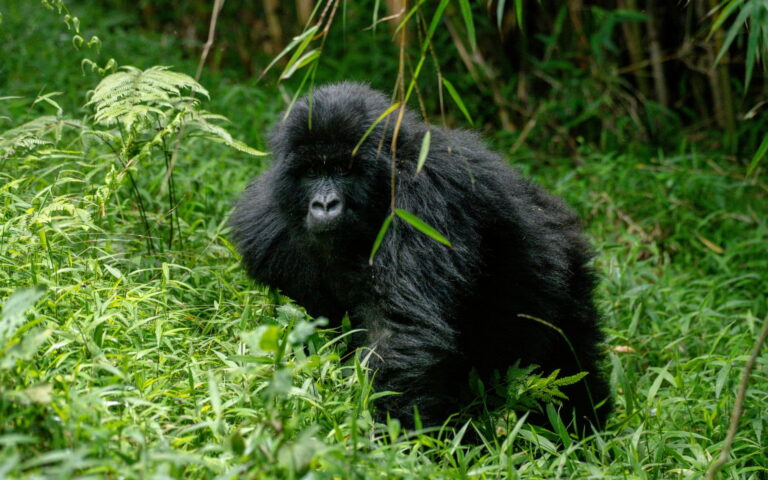
Habituation: The habitants which you can trek are habituated, which means that they have been accustomed to humans and generally they see people as neutral beings. They won’t get scared and run away and they won’t show any kind of aggressive behavior unless they are provoked or scared.
The Silverback’s Role: Even though the silverback (the dominant male) is big and strong, the guides give a warning to the trekkers the right way: when a gorilla charges, crouch down, do not look the animal in the eye, and show submission by your behavior, thus giving the gorilla an opportunity to show its dominance without feeling threatened.
This act is very seldom and is usually just a fake attack to check the group’s reaction. The guides are highly skilled in understanding gorilla language and they can manage these situations with great confidence and efficiency.
In conclusion, a safari to Bwindi is escorted, protected, and very well planned. The main factors for an experience here to be successful are park protocol compliance, physical preparation for the tough terrain, and the use of the services of the local porters and the professional UWA staff. Notably, your safety is conservation-driven.