
How much is a gorilla trekking permit in Uganda.
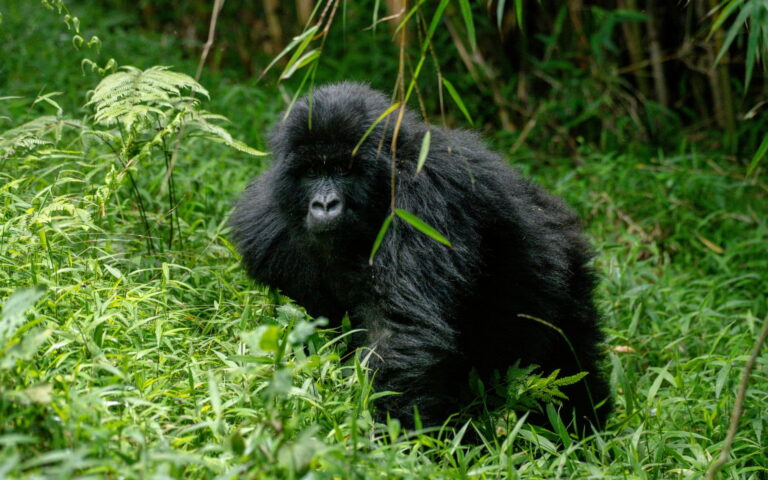
A gorilla trekking safari is often ranked as one of the most life-changing wildlife safari experiences on earth. The dram; one hour to just watch a wild mountain gorilla family in the pristine forest of Rwanda, Uganda or DR Congo, is what makes it very powerful but this comes at a heavy price: the gorilla trekking permit. So, in Uganda, the permit price is basically that important number that determines the total budget for the likewise trekking safaris. Being familiar with this charge, what this is for, and why it is that costly is quite handy when it comes to making a responsible and realistic plan for a trip to either Bwindi Impenetrable or Mgahinga Gorilla National Park.
The Core Cost: Uganda Gorilla Permit Price Structure.
The document needed for a gorilla trek in Uganda is the UWA certified gorilla permit and they are the ones that set its insurance fees. To compare these between cross border countries, one obvious difference is that they are quite stable in Uganda resulting competitive and getting better value for money.
Current Standard Permit Price (2024-2025).
The non-resident foreigner who desires to go on a gorilla trek for a day is expected to sell out $800 for the permit. This is to have that one time guide-led forest trek for wildlife viewing and the 1-hour habituated gorilla visit is the cap to that single-mountain gorilla family once found.
Resident Permit Pricing.
Uganda Wildlife Authority UWA is catering for EAC citizens and residents who are foreigners living in Uganda through offering discounted rates usually set at a fraction of the foreign non-resident standard rate (for example; $70 for the EAC citizens and $700 for foreign residents, while the exact rates for non-foreigner categories should always be confirmed by UWA or a tour operator). The majority of the tourists are, however, likely to pay the regular $800.00 USD.
Gorilla Habituation Permit.
If at all one wants to experience more than just a normal gorilla trekking, the UWA can issue a Habituation Experience permit (GHEX). Only $1,500 USD up front to currently get GHEX (This is a kind of permit that lets a person spend 4 hours instead of the usual one, a gorilla family.). Usually, with the habituation process, thus the presence of the human would be getting used to, groups are allowed thereby offering a more intense and prolonged interaction. Owing to the scarcity of these permits, they are extremely competitive and require booking a long time ahead.
The Value Behind the Price: Why Permits Are Expensive.
Going on wonderful wildlife safari experiences like a gorilla trek only costs $800 USD is quite a bold move, but to some extent this very cost reflects the enormous effort of the logistical operations, the locals’ and the conservation initiatives to keep the mountain gorillas alive. So the measure is not thrown out like that; it is one of the major sources of funds required for conservation.
Conservation Funding.
Most of the money paid for one permit will be promptly turned to gorilla conservation implementation activities. Part of it is the support to the UWA rangers on daily patrols of the gorilla they will come to protect against the poachers, to offer veterinary care, do census counts, or simply monitor to keep the gorillas healthy. As awareness goes that mountain gorillas are on the verge of extinction, the survival of these animals depends on the financial aids they get from such fees.
Community Benefit.
Roughly 10% of the permit fee is returned to the communities around Bwindi and Mgahinga through direct cash transfers. This sharing of money is important as it offers a real and visible economic benefit to the people living alongside the gorillas. Besides, the money is injected into local schools, hospitals, and road building, thus local people can actually see the gorillas not as rivals for the land but as a potential source of their own wellbeing. Without a doubt, involvement of the locals can be considered the single most important long-term strategy of the conservation of nature.
Park Infrastructure and Staffing.
This permit, in addition to covering the running costs of the parks, also pays for the up-keep of the ranger posts, the maintenance of the trekking routes, and the wages of the big teams of the paramilitary-style highly disciplined, specialized, and professional bush rangers, guiding staffs, and bodyguards who get trekkers safely and securely to the gorillas every day. In the absence of such a fee, it would not be possible to keep up with the complicated logistics which ensure safety for both gorillas and tourists.
Booking and Logistics: Securing Your Permit.
Gorilla permits are very strictly controlled, are few in number, and are non-refundable. It is imperative that one follows the booking procedures correctly to be sure of one’s trek.
Limited Availability.
Uganda puts a very tough cap on the daily permits (only 8 permits per habituated gorilla family). Such limitation is very important in terms of reducing stress and risk of disease transmissions from humans to gorillas. Due to the low number and high demand of permits, people cannot easily purchase these in a short time interval and the sells out of permits span from 6 to 12 months in advance mainly during the dry seasons (June to September and December to February).
How to Book.
The most secure and dependable method to get a permit is with a good Ugandan tour operator who can obtain the permit for you. The operator would do the UWA communication on your behalf, availability checking, and payment processing which thus would be finalizing your reservation for the exact date and time. If you try to book directly with UWA it would be slow, complex and inconvenient especially for foreign travelers. To guarantee a reservation, the full amount of the permit is normally paid in advance.
Permit vs. Total Cost.
One should not lose sight of the fact that the $800 permit charge is just a part of the whole safari price. So, it is a compulsory saving board fee for the gorilla experience only. Apart from that, a whole safari plan will have to cater for the expenses of international flights, accommodation, local transport, meals, tipping, and hiring of a vehicle and a driver/guide. In this way, the permit is positioned as the very first, non-negotiable step towards the trek, and the travelers are obligated to set aside the right amount of money for this.
In conclusion, the $800 USD sum of a gorilla trekking permit in Uganda essentially represents a fee for the exclusive privilege of an hour with the species that are on the brink of extinction. In fact, it is a direct injection of capital in the survival of mountain gorillas, the welfare of the local communities, and the upkeep of a world-leading conservation effort. Therefore, the very first moves to experiencing this African adventure of a lifetime should be booking well in advance and realizing what is behind the cost.