
How many gorillas trekking permits available in Uganda.
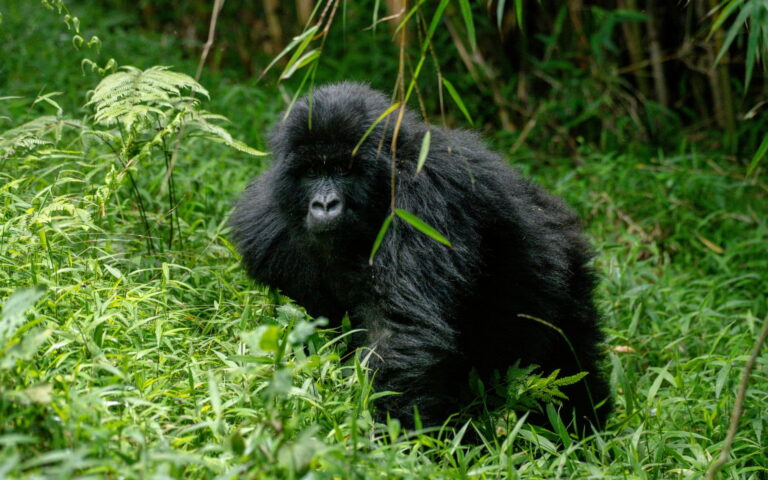
Uganda stands as one of the world’s most accessible and then important safari destination for the mountain gorilla trekking, majorly protecting the population within these dense confines of Bwindi Impenetrable Forest national park and then the stunning volcanic peaks of Mgahinga Gorilla National Park. For the travellers looking forward and planning this incredible safari experience, the single most important information is the number of the permits available daily. This figure dictates booking necessity, travel flexibility and then most importantly, the sustainability of gorilla conservation. The total number of permits is not arbitrary; it is a careful, scientific calculation managed by the Uganda Wildlife Authority (UWA).
The foundation of the limit: the 8-8-7 Rule.
The entire structure of gorilla trekking tourism in both Uganda and Rwanda is built around a rigid set of rules designed to reduce the impact of the human presence on the gorillas ‘health and then behaviour. The foundational mathematics of permit allocation is based on the ‘’8-hour, 8-person, 7-meter rule.’’
- 8 people; only eight tourists are allowed to visit a single habituated gorilla family per day,
- 1 hour: the maximum time allowed for the encounter is strictly limited to one hour.
- 7 meters: Visitors must maintain a minimum distance of seven meters from the gorillas at all the time.
Therefore, the total number of the permits available in Uganda daily is simply determined by multiplying the number of the currently habituated gorilla families that are stable enough for tourism by eight. This limit is strictly enforced to ensure the gorillas remain, healthy, minimally stressed and successfully habituated.
Bwindi impenetrable National Park: the main source of the permits.
Bwindi Impenetrable National Park is the epicentre of the Uganda’s gorilla tourism, which is a home of the largest number of the habituated families. The park is vast and then rugged, divided into four distinct geographical sectors, and then the permits must be booked for one specific sector. Because travel between these sectors is tiresome (sometimes taking up to eight hours), the sector you book dictates your accommodation and then trekking logistics.
As of the most recent counts, Bwindi impenetrable national park typically hosts around 19 to 21 habituated gorilla families that are reliably available for tourism, distributed across its four sectors;
| Bwindi sector | Location | Primary Access point | Approximate Habituated Families | Daily Permits Available (Families x8) |
| Buhoma | Northern Bwindi | Queen Elizabeth National Park/Kihihi Airstrip | 4 families | 32 permits |
| Ruhija | Eastern Bwindi | Kibale/Kihihi Airstrip | 4 families | 32 permits |
| Rushaga | Southern Bwindi | Kisoro/Southern Border | 7 to 9 families | 56 to 72 permits |
| Nkuringo | Southern Bwindi | Kisoro/Southern Border | 4 families | 32 permits |
| Total Bwindi (Approximate) | 19 to 21 families | 152 to 168 permits |
Bwindi’s total: On average, Bwindi Impenetrable Forest national park consistently provides between 152 and 168 permits per day. The number fluctuates slightly, mainly due to the Rushaga sector often having an extra family or two available at any given time. This large allocation ensures that Uganda maintains the highest daily availability of the gorilla permits in the world.
Mgahinga Gorilla National Park: the secondary source.
Mgahinga Gorilla National Park is the smaller, quieter counterpart to Bwindi, it is located in the Virunga Massif. It is famous for its three volcanic peaks, Golden Monkey tracking and then crucially its gorilla trekking safari.
Permit Availability: Mgahinga gorilla national park typically hosts only one or two habituated gorilla families that are consistently reliable for the tourist visits. This means Mgahinga usually offers between 8 and then 16 permits per day.
The Benefits of Mgahinga: while the number of the permits is small, the location offers a unique advantage; it is often the start point for the travellers who want to combine gorilla trekking safari with volcano hiking (like Mount Sabinyo or Mount Muhabura) or Golden monkey tracking. Furthermore, the area is logistically easier to combine with the transfers to Rwanda.
Grand total: Uganda’s daily limit.
When totalling the reliable numbers from Bwindi and then Mgahinga, Uganda offers an average total of the approximately 160 to 184 gorilla trekking permits per day. This substantial capacity is highly beneficial for travellers, as it increases the chance of securing permits on the desired dates, particularly during the peak seasons.
Implications for travellers and conservation strategy.
The large, yet strictly controlled, number of permits available has far reaching consequences that travellers must consider.
1.Booking Necessity and Peak season: while Uganda offers a more availability than Randa, permits for the peak dry seasons (June to September and December to February) still sell out quickly. Uganda Wildlife Authority and tour operators like WildApes strongly advise boking permits 6 to 12 months in advance to avoid disappointments especially for the high-demand Buhoma sector.
2.Direct funding for conservation: the sale of every permit, currently priced at 800 USD, generates essential revenue for the UWA. This money is directly channelled into anti-poaching patrols, veterinary interventions for the sick gorillas, habitat protection and crucial community revenue sharing program, which provides local populations with the financial incentive to protect the gorillas. The tourism model ensures the survival and growth of the species.
3. Sector choice and flexibility: the distribution of permits across Bwindi’s four sectors means travels have to make a strategic choice.
Buhoma and Nkuringo: Known for more established, upmarket luxury lodges.
Rushaga: Offers the highest permit availability and is the closet sector to the Rwandan border, marking it the best for combining safaris.
Ruhija: this is known for its higher altitude and then excellent birdwatching safaris opportunities.
Choosing a less popular sector of being flexible with your dates significantly increases your chances of securing a last-minute permit, though this is never guaranteed.
4.The Ongoing Habitation Process; it is important to remember that the number of available permits is dynamic. Gorilla Conservation is a success story, and as the population grows, UWA is continuously working to habituate new families. Once a new family is deemed stable and accustomed to human presence (a process that can take three to five year) an additional eight permits per day are released to the market, further increasing Uganda’s capacity for responsible tourism.
In conclusion, Uganda’s daily allocation of approximately 160 to 184 gorilla trekking permits is a testament to its successful conservation efforts. The strict limits are in place for the gorillas ‘protection, but the relatively high number ensures that Uganda remains the most accessible and cost-effective country for this unparalleled wildlife safari experience.