Ol Pejeta Conservancy.
There are wildlife destinations in Africa that deliver an exceptional safari experience. And then there are destinations that deliver an exceptional safari experience while simultaneously standing at the center of one of the most urgent and emotionally resonant conservation stories of the modern era. Ol Pejeta Conservancy in central Kenya does both with a quiet, purposeful confidence that makes it unlike any other wildlife destination on the continent and one of the most genuinely meaningful places a traveler with a serious interest in wildlife and conservation can choose to visit.
It is home to the world’s last two northern white rhinoceros. It shelters the largest black rhinoceros population in East Africa. It delivers Big Five game viewing of outstanding consistency and quality. And it operates within a community conservation framework that has become a reference point for wildlife management across Africa. For the traveler who approaches a safari not merely as a leisure activity but as a genuine engagement with the natural world and the human efforts to protect it, Ol Pejeta is, simply and without exaggeration, essential.
Introduction.
Ol Pejeta Conservancy covers approximately 365 square kilometers of open savanna, acacia woodland, and riverine forest in the Laikipia Plateau of central Kenya situated between the towns of Nanyuki and Nyahururu, approximately 240 kilometers north of Nairobi, at the foot of Mount Kenya’s northwestern slopes. It is the largest black rhinoceros sanctuary in East Africa and one of the most intensively and successfully managed private wildlife conservancies on the continent.
Established as a cattle ranch in the colonial era and converted to a wildlife conservancy in the 1980s, Ol Pejeta is today managed by a nonprofit organization the Ol Pejeta Conservancy whose mission encompasses wildlife conservation, community development, and environmental education in equal and genuinely integrated measure. The conservancy’s 35-kilometer electrified perimeter fence protects its wildlife from external poaching threats while allowing the internal ecosystem to function as a largely self-sustaining and increasingly diverse wildlife habitat.
The conservancy forms part of the larger Laikipia ecosystem a mosaic of private ranches, community conservancies, and small protected areas covering approximately 9,000 square kilometers of the central Kenya highlands which collectively support one of Kenya’s most impressive and diverse wildlife populations outside the formal national park system.
Attractions in Ol Pejeta Conservancy.
Northern White Rhinoceros the most celebrated and most heartbreaking of Ol Pejeta’s wildlife residents commands a category of attention entirely its own. Najin and Fatu, the world’s last two surviving northern white rhinoceros, live within a specially managed area of the conservancy under 24-hour armed guard and continuous veterinary monitoring. Both are female. The northern white rhinoceros is, for all practical purposes, functionally extinct as a naturally reproducing species its continuation now dependent entirely on an ongoing scientific program of assisted reproduction using stored genetic material and surrogate southern white rhinoceros females managed in partnership with international research institutions.
Visiting Najin and Fatu at Ol Pejeta is not merely a wildlife encounter it is a confrontation with the consequences of human failure to protect a species, and a witness to the extraordinary lengths to which dedicated scientists, conservationists, and rangers are going in their determination to give the northern white rhinoceros a future it has very nearly lost entirely. The emotional weight of standing in the presence of the last two individuals of a subspecies is considerable and lasting, and virtually every visitor who makes this encounter describes it as among the most personally significant moments of their entire Africa experience.
Black Rhinoceros Population the largest in East Africa, with over 140 individuals living within the conservancy’s protected perimeter represents Ol Pejeta’s most significant ongoing conservation achievement and one of the most important rhinoceros conservation programs in the world. Black rhinoceros can be encountered on game drives throughout the conservancy with a frequency and reliability that exceeds virtually any other destination in Kenya, and the quality of observation behavioral, close-range, and genuinely unhurried is outstanding. Seeing a black rhinoceros in the wild for the first time is an experience of considerable power, and Ol Pejeta delivers that experience with a consistency and professionalism that no comparable destination in the region can match.
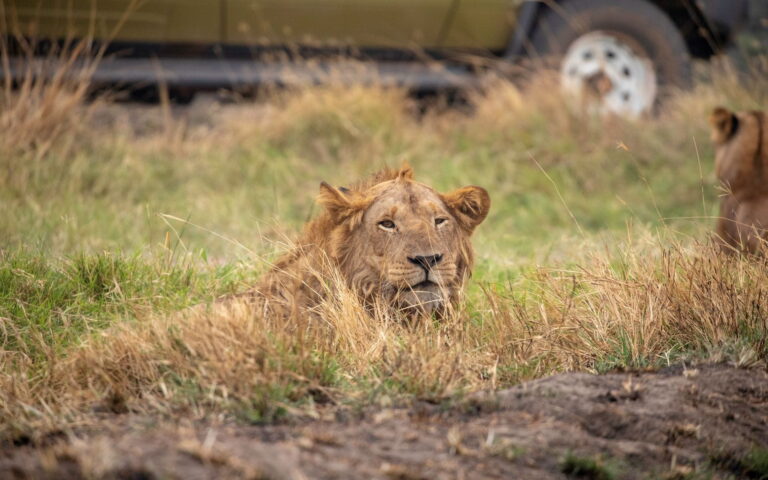
Big Five are all present and regularly observed within Ol Pejeta’s diverse and well-managed ecosystem. Lions including several well-known prides whose territories and individual histories are documented by the conservancy’s research team are encountered on game drives with reliable frequency, and the conservancy’s open savanna and acacia woodland terrain provides excellent visibility for predator observation and photography. Leopards inhabit the riverine forest corridors and rocky outcrops with their characteristic elusiveness, and dedicated early morning drives with experienced guides yield sightings of meaningful regularity for patient and attentive visitors.
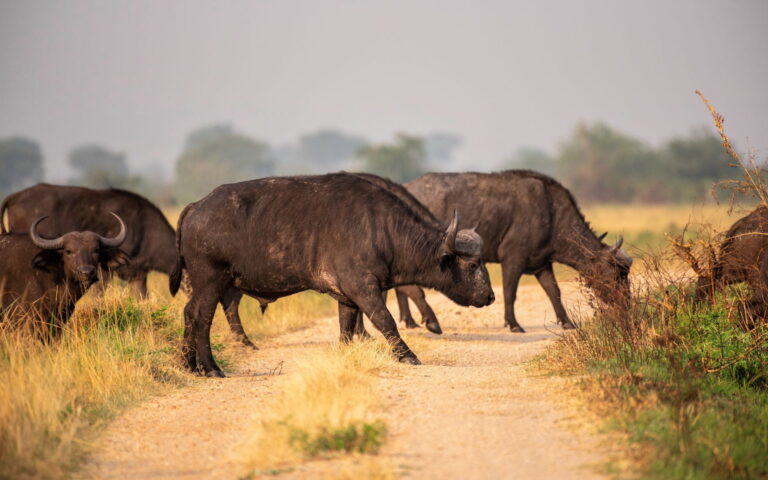
Elephants move through the conservancy in family herds of considerable size Ol Pejeta’s elephant population has grown steadily over recent years and is now one of the most visible and behaviorally accessible in central Kenya. Buffalo graze in large herds across the open grasslands, and the combination of all five Big Five species within a single 365-square-kilometer conservancy creates a game drive productivity that rivals the finest safari destinations in East Africa.
Chimpanzee Sanctuary an unusual and deeply moving feature of Ol Pejeta’s wildlife offering shelters a group of orphaned and rescued chimpanzees from across Central and West Africa in a large, forested sanctuary that provides them with permanent, high-quality care and a naturalistic living environment. Guided visits to the sanctuary provide close-range observation of chimpanzee social behavior, individual personalities, and the complex relationships within the group a genuinely engaging primate encounter in a context of compassionate conservation purpose that resonates powerfully with visitors of all ages and backgrounds.
Sweetwater’s Tented Camp Sundowner Site a hilltop vantage point overlooking the conservancy’s open plains with Mount Kenya’s glaciated summit visible on clear days to the southeast offers one of the finest sundowner experiences in central Kenya, combining panoramic landscape views with the warm, golden light of the northern Kenya evening in a setting of such concentrated natural beauty that it provides a fitting and emotionally resonant conclusion to any Ol Pejeta game drive day.
Activities to do at Ol Pejeta Conservancy.
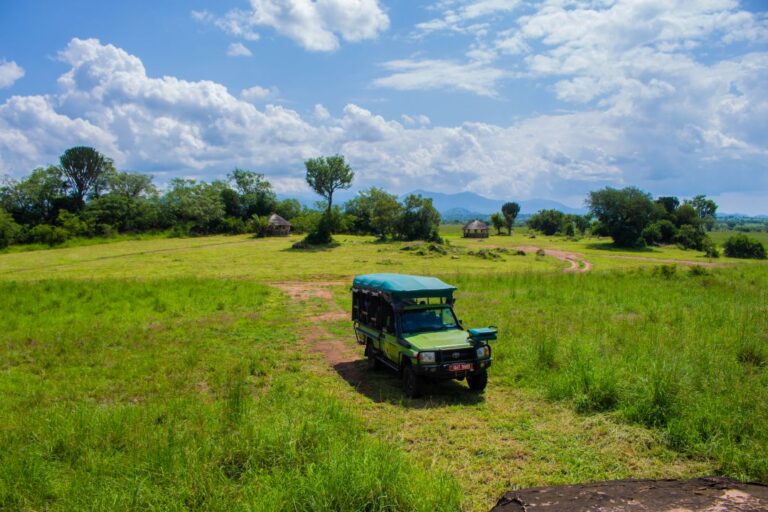
Game Drives across Ol Pejeta’s diverse terrain guided by some of the most knowledgeable and experienced naturalists in central Kenya deliver Big Five encounters of outstanding consistency and depth, with the conservancy’s rhinoceros population providing a wildlife highlight available at very few comparable East African destinations. Day and night game drives are both available, with nocturnal drives revealing the conservancy’s leopards, servals, spring hares, and other after-dark wildlife in encounters of considerable frequency and surprise.
Rhino Tracking on Foot a guided walking activity conducted by experienced rangers within designated areas of the conservancy provides an intimate and physically engaged encounter with Ol Pejeta’s black rhinoceros population that no vehicle-based game drive can replicate in atmospheric immediacy or personal impact. Walking toward a black rhinoceros in open savanna, guided by a ranger whose knowledge of individual animal behavior and territorial patterns ensures both safety and proximity, is one of the most viscerally exciting wildlife activities available in Kenya.
Chimpanzee Sanctuary Visits guided by sanctuary staff provide close-range observation of chimpanzee social behavior across morning feeding and activity periods an encounter of genuine scientific interest and considerable personal charm that appeals strongly to family visitors and wildlife enthusiasts seeking primate experiences beyond the standard Kenyan safari portfolio.
Cycling and Walking Safaris within designated areas of the conservancy offer physically engaging, ecologically immersive alternatives to vehicle-based game drives experiencing the sights, sounds, and smells of the Laikipia savanna at ground level and at human pace in a manner that transforms the safari from passive observation into active, fully embodied participation in the landscape.
Horseback Safaris conducted by experienced equestrian guides provide a perspective on Ol Pejeta’s wildlife and landscape that neither vehicles nor walking fully replicates moving through the conservancy at animal height and animal pace in a manner that allows remarkably close encounters with wildlife habituated to the presence of horses.
Conservation Education Experiences including guided visits to the rhinoceros monitoring center, anti-poaching unit demonstrations, and conservation research briefings by Ol Pejeta’s scientific staff provide an intellectually engaging and emotionally compelling engagement with the conservation science and management practice that underpins the conservancy’s wildlife achievements, and are particularly valuable for visitors with a professional or academic interest in wildlife conservation.
When to Visit Ol Pejeta Conservancy.
Ol Pejeta Conservancy offers rewarding wildlife viewing throughout the year its permanent water sources, diverse habitat, and intensively managed wildlife population ensuring consistent game drive productivity in every season. The dry seasons January through March and June through October provide the most favorable conditions for game drives, with reduced vegetation cover improving visibility and wildlife concentrating around water points in predictable patterns that experienced guides navigate with impressive accuracy.
The wet seasons April through May and November through December bring lush green vegetation and dramatically beautiful skies, with excellent birding conditions and the particular vitality of the landscape in full biological productivity. Game drives remain productive during these periods, and the conservancy’s year-round rhinoceros encounter quality is largely independent of seasonal rainfall patterns making Ol Pejeta one of the most reliably rewarding wildlife destinations in Kenya regardless of when a visit takes place.
Where to Stay in Ol Pejeta Conservancy.
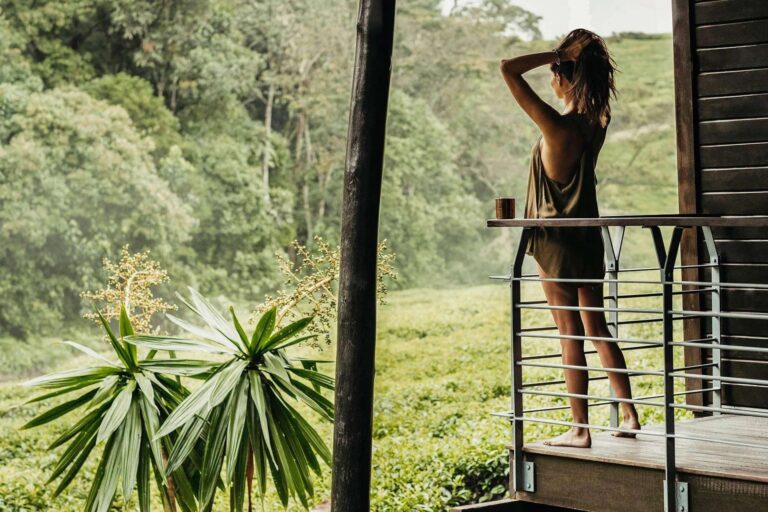
Sweetwater’s Tented Camp Ol Pejeta’s most established and most internationally celebrated accommodation property offers 39 spacious, individually appointed tents set in a private concession within the conservancy, overlooking a floodlit waterhole that attracts rhinoceros, elephant, and buffalo throughout the night. Its combination of comfortable luxury, excellent game drive program, chimpanzee sanctuary access, and outstanding northern white rhinoceros encounter makes it the natural first choice for visitors seeking a comprehensive Ol Pejeta experience within a single, well-managed property.
Ol Pejeta Bush Camp provides a more intimate and adventurous tented camp experience within a private section of the conservancy with smaller capacity, more personalized guiding, and a closer, less structured engagement with the conservancy’s landscape and wildlife that appeals strongly to experienced safari travelers seeking depth of experience over hotel-style comfort.
Porini Rhino Camp an intimate, eco-certified tented camp operating within a private conservancy adjacent to Ol Pejeta offers exceptional rhinoceros tracking, Big Five game drives, and the kind of quietly excellent, conservation-focused hospitality that has made the Porini camp network one of the most respected and most genuinely responsible safari accommodation brands in Kenya.
Serena Sweetwater’s offers full-service lodge accommodation of considerable comfort within the conservancy combining well-appointed rooms, excellent cuisine, and a comprehensive activity program with the service standards and amenities of the Serena Hotels group, making it the most practically comfortable and logistically complete accommodation option for family visitors and travelers seeking reliable luxury alongside exceptional wildlife.
How to Get to Ol Pejeta Conservancy.
Ol Pejeta Conservancy is located approximately 240 kilometers north of Nairobi in the Laikipia Plateau a journey of approximately two and a half to three hours by road through the Thika Superhighway and the central highlands highway through Nanyuki. The drive passes through the scenic Kenyan highlands and the Mount Kenya foothills with considerable visual interest, and the road is well-maintained tarmac for the entire journey to the conservancy gates making road transfer a practical and personally rewarding option for visitors with time to enjoy the journey.
Domestic flights from Wilson Airport in Nairobi to Nanyuki Airstrip a journey of approximately 40 minutes provide the most time-efficient access option, with conservancy vehicle transfers from the airstrip to accommodation properties taking approximately 30 minutes. Most lodge properties arrange private transfers as part of their arrival services, and coordinating transportation through your accommodation or safari operator is the most seamless approach to reaching one of central Kenya’s most important and most rewarding wildlife destinations.