Mount Kenya National Park.
Mount Kenya National Park an extraordinary safari destination on a Kenya safari. And for the traveler who discovers it who walks its forest trails, crosses its high moorlands, and stands among its dramatic peaks in the thin, clean air of the Afro-alpine zone it reveals itself as one of the most genuinely beautiful, ecologically fascinating, and personally rewarding mountain destinations anywhere on the African continent.
Mount Kenya National Park and the surrounding Mount Kenya Forest Reserve together protect a landscape of outstanding natural significance a UNESCO World Heritage Site and a Biosphere Reserve whose ecological importance extends far beyond its summit peaks to encompass one of Kenya’s most critical water catchment areas and one of East Africa’s most biodiverse montane forest ecosystems.
Mount Kenya National Park covers approximately 715 square kilometers of protected land encompassing the upper slopes and peaks of Mount Kenya in central Kenya situated almost precisely on the equator, approximately 175 kilometers northeast of Nairobi. The park was established in 1949 and designated a UNESCO World Heritage Site in 1997, forming the core of a larger protected landscape that includes the surrounding Mount Kenya Forest Reserve a belt of montane forest covering the mountain’s lower slopes that serves as the primary water source for millions of people living in the surrounding counties.
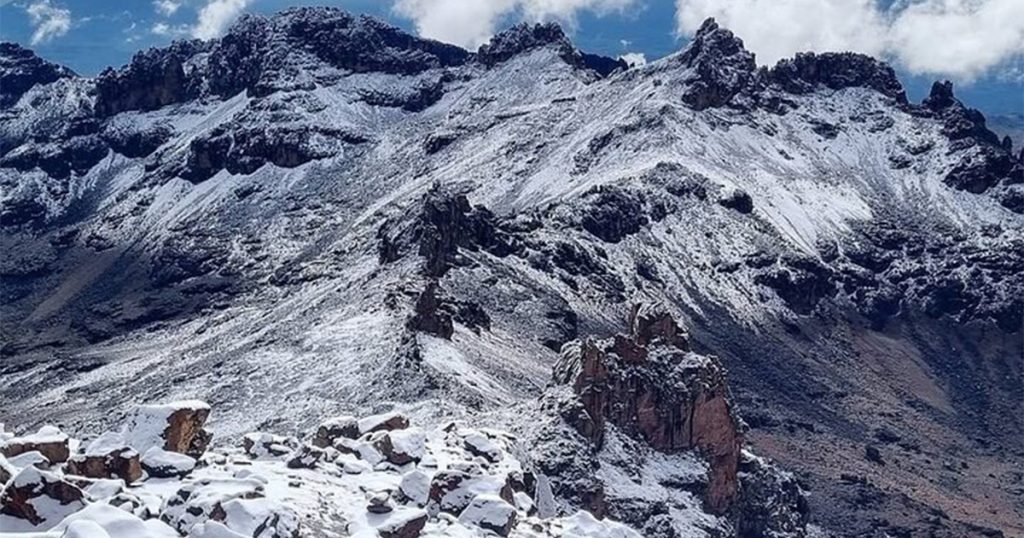
Mount Kenya is a volcanic massif the eroded remnant of an ancient shield volcano estimated to have reached approximately 6,500 meters at its original height before glacial erosion reduced it to its current profile comprising several distinct peaks of which Batian at 5,199 meters and Nelion at 5,188 meters are the highest and most technically demanding, accessible only to experienced mountaineers with technical rock-climbing skills. Point Lenana at 4,985 meters the mountain’s third highest peak and the objective of the vast majority of trekking visitors is accessible to fit, well-prepared trekkers without technical climbing experience, making it the standard summit goal for non-technical visitors and the destination around which the park’s trekking infrastructure is primarily organized.
Attractions in Mount Kenya National Park.
The Peaks of Batian, Nelion, and Point Lenana define Mount Kenya’s summit landscape and represent three very different levels of mountaineering challenge within the same dramatic alpine environment. Batian and Nelion separated by a narrow rocky col known as the Gate of the Mists require technical rock climbing skills, specialist equipment, and experienced high-altitude mountaineering guides, and their ascent represents one of the finest and most committing technical climbing experiences in Africa. Point Lenana, while non-technical, demands genuine physical fitness, adequate acclimatization, and the determination to push through the considerable discomfort of high-altitude exertion at nearly 5,000 meters and rewards that determination with summit views of extraordinary panoramic scope across the Kenyan highlands.
The Afro-Alpine Moorland of Mount Kenya’s middle and upper slopes is one of the most visually extraordinary high-altitude ecosystems in Africa a vast, open landscape of tussock grasses, giant heathers, and the remarkable giant groundsel and giant lobelia plants whose prehistoric, architectural forms give the moorland a quality of botanical surrealism that strikes virtually every visitor with immediate and lasting force. These giant plants Senecio keniodendron and Lobelia telekii among others are found only on the high mountains of East Africa and represent one of the most distinctive and scientifically fascinating examples of high-altitude plant adaptation anywhere in the natural world.
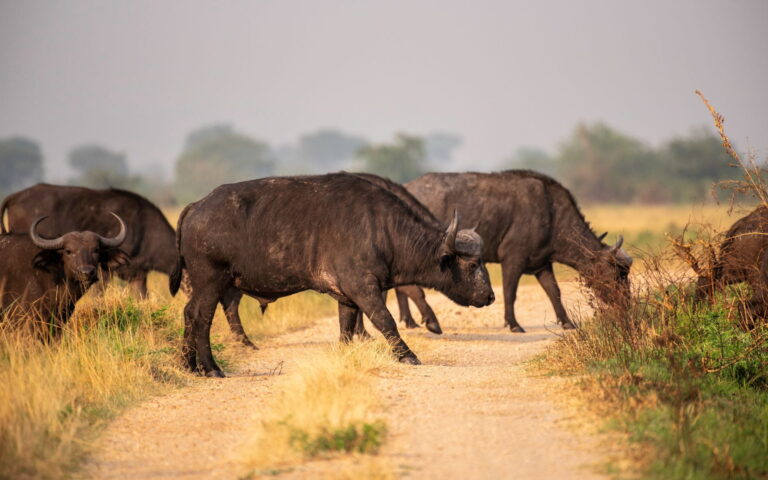
The Montane Forest Zone on Mount Kenya’s lower slopes is among the most biodiverse and wildlife-rich forest ecosystems in Kenya a dense, mist-draped environment of ancient trees, bamboo thickets, and dense undergrowth inhabited by elephant, buffalo, leopard, giant forest hog, bushbuck, and ten primate species including the black-and-white colobus monkey and the blue monkey. The forest is home to over 130 bird species, including the magnificent crowned eagle, Hartlaub’s turaco, and numerous sunbird species, and provides one of Kenya’s finest wildlife walking environments for visitors who approach it with appropriate ranger guidance and genuine ecological curiosity.
The Alpine Lakes of Mount Kenya’s high valleys Michaelson, Hausberg, Oblong, Emerald, and the iconic Teleki Valley lakes among others are among the mountain’s most photographed and most atmospherically beautiful features, reflecting the dramatic peaks and moorland sky in their still, glacially cold waters and providing a visual quality of alpine grandeur that feels, at this equatorial latitude, genuinely surprising and deeply moving.
The Lewis and Tyndall Glaciers the remnant ice bodies that cling to the upper slopes of Batian and Nelion are among the most tangible and emotionally resonant indicators of climate change visible anywhere in Kenya, their retreat documented in a century of photographic records that show a landscape in the process of fundamental transformation. Observing them from the summit plateau of Point Lenana carries a weight of environmental significance that colors the entire summit experience with a particular kind of melancholy and urgency.
Trekking Routes of Mount Kenya National Park.
Sirimon Route approaching from the northwest is widely regarded as the finest and most scenic of Mount Kenya’s non-technical trekking routes following a gradual, well-acclimatized ascent through open moorland and dramatic high valleys to Shipton’s Camp at 4,200 meters before the final push to Point Lenana. Its relatively low daily visitor numbers, excellent wildlife viewing opportunities in the bamboo and moorland zones, and outstanding views of the mountain’s northern peaks make it the preferred choice of experienced trekkers seeking the finest overall Mount Kenya experience.
Naro Moru Route is the most direct and most heavily used route on the mountain approaching from the west through dense montane forest and across the infamous Vertical Bog a section of saturated, tussocky moorland that lives up to its name with impressive fidelity before reaching Mackinder’s Camp at 4,200 meters for the summit approach. Its shorter duration and established infrastructure make it the most popular choice for first-time Mount Kenya visitors, though its directness comes at the cost of a less gradual acclimatization profile than the longer routes provide.
Chogoria Route approaching from the east through the Chogoria Forest Reserve is consistently cited by experienced guides as the most scenically spectacular of all Mount Kenya’s trekking routes passing through some of the mountain’s finest montane forest before emerging onto the Gorges Valley, where dramatic rock walls, high waterfalls, and the extraordinary Lake Michaelson create a landscape of alpine grandeur that many trekkers describe as the most beautiful section of terrain on the entire mountain. Its greater length requires additional days but delivers a trekking experience of exceptional scenic quality that rewards the investment of time fully and generously.
Traverse Routes combining ascent on one route and descent on another most commonly the Sirimon-Chogoria traverse are recommended by experienced operators as the optimal approach for trekkers with sufficient time, delivering the scenic highlights of two routes within a single itinerary and providing a more complete and varied engagement with the mountain’s extraordinary landscape diversity.
Activities to do in Mount Kenya National Park.
Summit Trekking to Point Lenana on any of the mountain’s established routes is the defining activity for the majority of Mount Kenya visitors a multi-day journey through forest, moorland, and high alpine terrain to the non-technical summit at 4,985 meters, guided by licensed Kenya Wildlife Service guides and supported by experienced mountain porters.
Technical Mountaineering on Batian and Nelion provides one of Africa’s finest and most committing rock climbing experiences for qualified alpinists routes of varying technical difficulty on both peaks have been established and documented over a century of mountaineering activity, and the quality of the rock, the dramatic alpine environment, and the genuine commitment required for the major lines places Mount Kenya firmly among the continent’s premier technical climbing destinations.
Wildlife Walks in the montane forest zone guided by KWS rangers offer focused encounters with Mount Kenya’s remarkable forest wildlife elephant, buffalo, colobus monkey, and forest birds in one of Kenya’s most biologically rich and least visited forest ecosystems.
Bird Watching across Mount Kenya’s five vegetation zones delivers sightings of over 130 recorded species from the montane forest specialists of the lower slopes to the high-altitude sunbirds and francolins of the moorland zone making the mountain a destination of genuine significance for ornithologically inclined travelers.
Fishing in the mountain’s high-altitude streams and lakes where brown and rainbow trout were introduced during the colonial era and now sustain a small but productive sport fishery offers a uniquely atmospheric angling experience in a setting of dramatic alpine beauty that few other fishing destinations in Africa can remotely approach.
When to Visit Mount Kenya National Park.
Mount Kenya’s two primary climbing seasons align with Kenya’s dry periods January through February and late June through September when weather conditions on the upper mountain are most stable and summit views are clearest. January and February offer particularly good conditions with generally settled weather and fewer trekkers than the July to September peak season.
The wet seasons April through June and October through December bring persistent rainfall and cloud cover that can obscure the peaks and make trail conditions challenging, particularly in the Vertical Bog section of the Naro Moru Route. However, the forest is at its most lush and biologically active during these periods, and the mountain’s wildlife and botanical interest is if anything enhanced by the rains making wet season visits genuinely rewarding for travelers whose primary interest lies in the forest ecology rather than the summit.
Where to Stay in Mount Kenya National Park.
Fairmont Mount Kenya Safari Club set in 100 acres of landscaped grounds on the equator at the base of Mount Kenya near Nanyuki is the most celebrated and historically significant luxury property in the Mount Kenya region, combining colonial-era character with genuinely excellent accommodation, cuisine, and recreational facilities. Originally established as a private members’ club by actor William Holden and associates in the 1950s, it retains an atmosphere of privileged, unhurried elegance that makes it the natural choice for discerning travelers seeking luxury accommodation alongside proximity to the mountain. Its equatorial location marked by a white line across the club grounds and its sweeping views of Mount Kenya’s peaks add a geographical novelty to its considerable experiential appeal.
Ol Pejeta Bush Camp within the Ol Pejeta Conservancy adjacent to Mount Kenya offers an intimate tented camp experience of genuine quality in a wildlife-rich private conservancy that provides exceptional Big Five game viewing including the world’s last two northern white rhinoceros within easy reach of the mountain’s trekking routes. The combination of conservancy wildlife and mountain trekking within a single Nanyuki-area itinerary represents one of the most varied and rewarding short safari options in central Kenya.
Batian Camp a comfortable mountain hut operated by the Mountain Club of Kenya at 4,200 meters on the Sirimon Route provides the finest high-altitude accommodation available on the mountain itself, with dormitory beds, basic cooking facilities, and the particular camaraderie of a mountain hut shared with climbers and trekkers from across the world. It is the preferred overnight option for trekkers on the Sirimon Route seeking the most direct and atmospheric engagement with the mountain’s high-altitude environment.
Serena Mountain Lodge built into the forest at 2,195 meters on Mount Kenya’s southwestern slopes offers a unique and memorable wildlife accommodation experience, with rooms positioned above a floodlit forest waterhole that attracts elephant, buffalo, giant forest hog, and numerous other forest animals throughout the night. Guests observe wildlife from their rooms, from a dedicated viewing platform, and from the lodge’s open verandas in an experience that combines comfortable accommodation with some of the most unusual and intimate wildlife viewing available anywhere in Kenya.
How to get to Mount Kenya National Park.
Mount Kenya National Park is accessible through three main gates corresponding to its primary trekking routes the Sirimon Gate near Nanyuki for the Sirimon Route, the Naro Moru Gate near Naro Moru town for the Naro Moru Route, and the Chogoria Gate near Chogoria town for the Chogoria Route. All three gate towns are located on or near the Nanyuki-Embu road that circumnavigates the mountain’s lower slopes a journey of approximately two to three hours from Nairobi by road through the Thika Superhighway and the central highlands.
Nanyuki the principal gateway town for Mount Kenya on the mountain’s northwestern side is served by scheduled domestic flights from Wilson Airport in Nairobi to Nanyuki Airstrip, a journey of approximately 40 minutes that provides the most time-efficient access for visitors combining a Mount Kenya visit with other northern Kenya destinations. Road transfer from Nairobi to Nanyuki takes approximately two and a half to three hours on the well-maintained Thika-Nanyuki highway a journey through the scenic Kenyan highlands that passes the Aberdare Range and the sprawling agricultural landscapes of the central plateau with considerable visual interest.
Mount Kenya National Park is a safari destination that rewards genuine engagement physical, intellectual, and ecological with a mountain of extraordinary natural complexity and personal significance. Whether the objective is a technical summit attempt on Batian, a non-technical trekking route to Point Lenana, a forest wildlife walk, or simply the experience of standing on the equator within sight of permanent glacial ice, the mountain delivers something that no other destination in Kenya quite replicates a sense of the natural world at its most ancient, most diverse, and most quietly, persistently magnificent.