Geography and Formation of Lake Kivu.
Lake Kivu occupies a dramatic position along the western border of Rwanda, separating the country from the Democratic Republic of Congo. It is one of the African Great Lakes, though it receives far less international attention than its larger neighbors, Victoria, Tanganyika, and Malawi. The lake stretches approximately ninety kilometers from north to south and reaches a maximum width of forty-eight kilometers. It is very deep, going down to almost 500 meters in some areas.
It was formed by the same volcanic actions responsible for the formation of the Virunga range. Tectonic movements in the East African Rift Valley region caused the formation of the lake basin, and volcanic eruptions subsequently sealed off the lake’s northern drainage point, resulting in the present-day closed lake. Because of its volcanic past, Lake Kivu possesses a distinct feature. The presence of dissolved CO2 and methane gas in the depths of the lake makes it classified among the few exploding lakes in the world. While the risk of a limnic eruption is real and monitored carefully, the lake remains safe for visitors, with gas extraction projects actively working to reduce the hazard.
Why Lake Kivu Stands Apart.
Most of Africa’s Great Lakes pose risks to swimmers. Bilharzia, a parasitic infection transmitted by freshwater snails, is common in Lake Victoria and Lake Malawi. Crocodiles and hippos, both dangerous to humans, inhabit many of the region’s waterways. Lake Kivu has none of these concerns. The lake’s deep, cold waters and unusual chemistry discourage the snails that carry bilharzia. Crocodiles and hippos are absent. Swimming here is not merely tolerated but encouraged.
The water is clean and clear, though it can be cooler than swimmers accustomed to tropical oceans expect. The best swimming beaches are found near the lakeside towns of Gisenyi, Kibuye, and Cyangugu. Most guest houses and hotels have their own private beaches or have close proximity to the swimming areas. It is quite an easy experience, just floating around on the tranquil waters while looking up at the verdant hills that reach out to the shores.
Towns and Destinations along the Lake Kivu Coast.
There are several towns that dot the coastline of Lake Kivu in Rwanda. There are differences between these towns, and for this reason, visitors usually opt to visit at least two or three of them.
Gisenyi, now officially known as Rubavu, is the largest town on the Rwandan side of the lake. It sits on the northern shore, just across the border from the Congolese city of Goma. The town has a serene atmosphere, akin to that of a resort, with its long sandy beaches, palm trees, and promenade dotted with hotels and restaurants. The town had been favored by the Belgian colonial masters and has a few buildings which belong to this period. Visitors in Gisenyi have an opportunity to observe the plumes of smoke arising from the volcano of Mount Nyiragongo. Day trips to the border market are possible for those with appropriate documentation, though crossing into Goma requires advance planning and security assessment.
Kibuye, also called Karongi, occupies the middle of the lake’s eastern shore. Many travelers consider Kibuye the most beautiful of the lakeside towns. The hills here rise steeply from the water, creating dramatic vistas at every turn. The town is quieter than Gisenyi, with fewer visitors and a slower pace. The main attraction is simply being on the lake. Boats can be hired for trips to the nearby islands, including Napoleon Island, named for its resemblance to the French emperor’s hat. The island is home to a large colony of fruit bats, which take flight at dusk in swirling clouds.
Cyangugu, now known as Rusizi, sits at the southern tip of the lake. This town is the nearest lakeshore village to Nyungwe Forest National Park, thus offering a suitable destination for tourists who wish to switch from gorilla trekking to relaxing at the lake. This area is less developed compared to the north shore, hence having fewer lodging facilities but more privacy.
Activities on and Around the Lake Kivu.
This Lake offers safari activities suited to travelers of all energy levels. For those seeking relaxation, simply sitting by the water with a good book is a valid use of a day. The lake’s calm surface and mild climate create perfect conditions for doing nothing at all.
For more active visitors, kayaking is an excellent way to explore the shoreline and the lake’s small islands. Several operators in Gisenyi and Kibuye rent kayaks by the hour or by the day. Guided kayak tours can also be arranged, with routes that pass through quiet coves and past fishing villages.
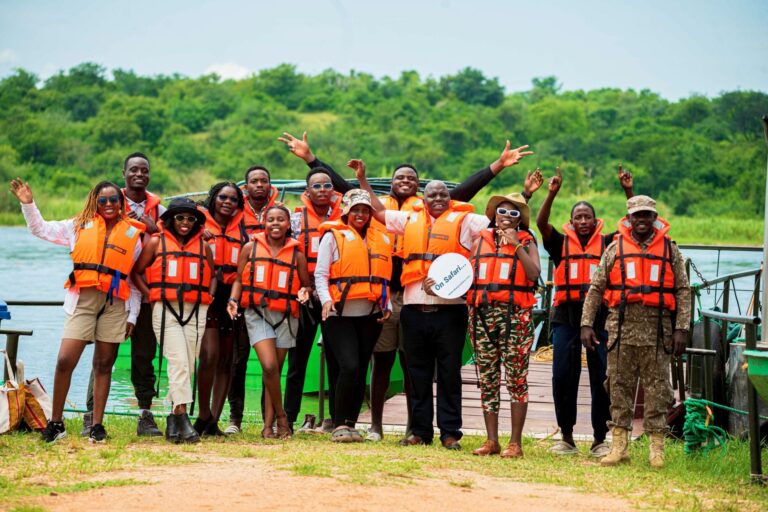
Boat tours are the most popular organized safari activity. A typical tour lasts two to three hours and visits one or more of the lake’s islands. The guides explain the lake’s history, its unusual geology, and the daily lives of the fishing communities along the shore. The sunset tour is very special when the sun sets behind the Congo mountains, giving colors of orange and pink to the lake.
Those with extra time have the opportunity to go mountain biking on the lakeside trails that offer stunning views as well as a physical challenge. The trail from Gisenyi to Kibuye is especially stunning with its climbs and descents that follow the hills’ shapes and curves. This trail is about one hundred kilometers long and takes around a day to finish.
Accommodations around Lake Kivu.
There are many different accommodation choices for Lake Kivu. At Gisenyi, some of the most expensive accommodation includes Lake Kivu Serena Hotel, an expansive establishment complete with lush gardens and pool with direct access to the beach. Some midrange and cheaper options include a range of guest houses and hostels. At Kibuye, the Cormoran Lodge can be found on a peninsula, with views of the lake. The Moriah Hill Resort offers comfortable rooms in a reasonably priced establishment.
It should be visited between the months of June and September as well as December through February during the dry seasons. It rains little during these months hence providing nice weather conditions for those visiting the lake. One may visit the lake anytime in a year but it may rain heavily at some point during the wet seasons.
In conclusion; Lake Kivu is not an adrenaline safari destination. You will not find white-water rafting or bungee jumping here. What you will find is something equally valuable: a place to pause. After the intensity of gorilla trekking safari, after the early mornings and muddy trails, after the emotional weight of the genocide memorials, the lake offers rest. You can swim, you can kayak, you can simply sit. The hills are green, the water is calm, and the pace of life is slow. For many travelers, these quiet days become the unexpected highlight of their Rwandan journey.