Aberdare National Park.
Aberdare National Park is Kenya’s famous and most attractive safari destination. It is a highland world of dense montane forest, open moorland, rushing waterfalls, and mist-draped ridgelines where the wildlife moves with a forest-adapted stealth that makes every encounter feel genuinely earned a place where the safari experience operates on entirely different terms from the open savanna parks of the Rift Valley and the southern circuit, and where the reward for patience, attentiveness, and a genuine willingness to engage with a more intimate and less predictable form of wildlife observation is something quietly extraordinary and deeply memorable.
The Aberdares have been attracting travelers since the early days of Kenya’s tourism history it was here, in the forest above Nyeri, that Princess Elizabeth learned of her accession to the British throne in February 1952 while staying at Treetops Lodge and the combination of historical significance, ecological richness, and genuinely dramatic highland landscape has made the park one of Kenya’s most distinctive and enduringly rewarding safari destinations.
Aberdare National Park covers approximately 767 square kilometers of montane forest, bamboo woodland, and high moorland in the Aberdare Range a chain of volcanic mountains running north to south through central Kenya, west of Mount Kenya and approximately 150 kilometers north of Nairobi. The park was established in 1950 and forms the core of a larger protected landscape that includes the surrounding Aberdare Forest Reserve a critical water catchment area supplying the Tana and Athi rivers and providing water to millions of Kenyans in the surrounding counties and in Nairobi itself.
The park encompasses two distinct ecological zones that differ dramatically in character and wildlife experience. The Salient a lower-elevation finger of forest projecting eastward from the main park boundary is the most accessible and most visited section of the park, characterized by dense riverine forest, open glades, and permanent streams that attract wildlife in concentrations that make it the most productive zone for game viewing. The high moorland of the main range reaching elevations of over 4,000 meters on the summits of Ol Donyo Lesatima and Kinangop offers a completely different landscape of open, wind-swept grassland, giant heathers, and dramatic volcanic rock formations inhabited by a specialist high-altitude wildlife community of considerable ecological interest.
Attractions in Aberdare National Park.
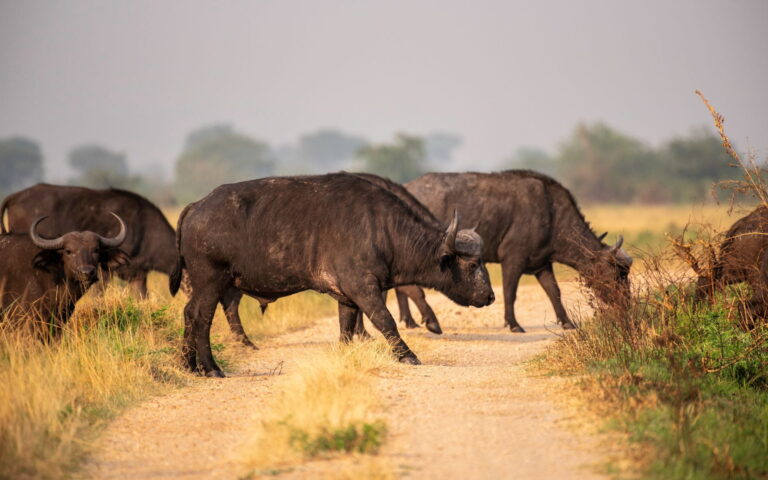
The Forest Wildlife of the Aberdare Salient represents the park’s most celebrated and most consistently rewarding attraction a dense, biologically rich environment where the Big Five are all present and where the quality of elephant and buffalo observation in particular is among the finest available in any Kenyan highland ecosystem. Aberdare’s elephants move through the forest with a characteristic, shadow-like quietness that makes every encounter feel surprising and intimate large bulls with impressive tusks emerge from the undergrowth at forest glades and waterholes with a suddenness that never fails to arrest the attention completely.
The black rhinoceros present in the Aberdares in greater numbers than almost any other Kenyan highland forest inhabits the dense vegetation of the Salient with its characteristic combination of elusiveness and sudden, alarming proximity, and sightings while never guaranteed are possible with sufficient time and dedicated observation at productive waterhole and forest glade sites. The Aberdares represent one of Kenya’s most important black rhinoceros sanctuaries, and the presence of this critically endangered species gives the park a conservation significance that extends well beyond its considerable intrinsic wildlife value.
Leopards are present throughout the Salient Forest in meaningful numbers and are observed with a frequency that exceeds most comparable Kenyan forest destinations the combination of dense cover, abundant prey, and the floodlit waterhole environment of the park’s tree lodges creates conditions for leopard observation of exceptional quality, particularly during nocturnal viewing sessions at the lodges.
The African wild dog one of the continent’s most endangered large carnivores has historically been recorded in the Aberdares, though sightings are rare and cannot be relied upon. Their presence within the ecosystem adds a conservation dimension of considerable significance and represents one of the park’s most exciting and least predictable wildlife possibilities.
The Waterfalls of the Aberdare Range are among the park’s most visually spectacular natural features the Karura Falls and Chania Falls in the Salient, and the magnificent Gura Falls on the moorland escarpment, are among the most dramatic and photogenic waterfalls in Kenya, their waters plunging through forested gorges and open moorland with a power and visual impact that makes them compelling destinations in their own right for visitors whose interest extends beyond wildlife to the broader natural beauty of the highland landscape.
The High Moorland accessible through the moorland road that traverses the main range between Ol Donyo Lesatima and Kinangop offers a completely different and genuinely extraordinary landscape experience, with open vistas across the central Kenya highlands, giant heather and lobelia vegetation reminiscent of the Afro-alpine zones of Mount Kenya and Kilimanjaro, and a high-altitude wildlife community that includes eland, leopard, serval, and the rare bongo antelope one of Africa’s most beautiful and most elusive forest antelopes, present in the Aberdares in one of its last viable Kenyan populations.
The Bongo is one of the Aberdare’s most extraordinary and significant wildlife residents. This large, chestnut-colored forest antelope with vertical white stripes and elegantly spiraling horns inhabits the dense bamboo and forest zones of the middle and upper slopes in small numbers that make sightings genuinely rare and correspondingly precious. The Aberdare National Park supports one of the world’s most important mountain bongo populations, and conservation programs aimed at protecting and growing this population represent one of the park’s most significant ongoing wildlife management priorities.
Activities to do in Aberdare National Park.
Night Game Viewing from the park’s famous tree lodges where floodlit waterholes and salt licks attract wildlife throughout the night in remarkable variety and number is the Aberdare’s most distinctive and celebrated activity, delivering wildlife encounters of extraordinary intimacy and behavioral richness that no daytime game drive in the forest can replicate with comparable reliability.
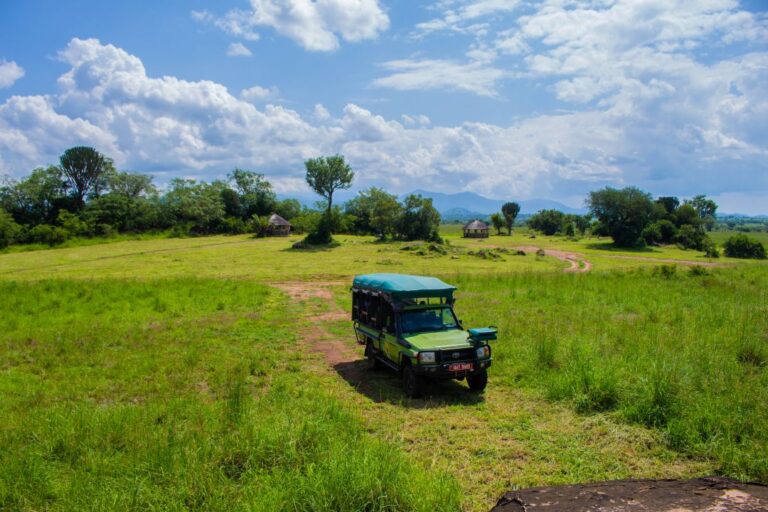
Game Drives through the Salient’s forest tracks and open glades in the early morning and late afternoon provide the best conditions for active wildlife observation elephant, buffalo, waterbuck, bushbuck, giant forest hog, and numerous primate species are regularly encountered, and the intimate scale of the forest environment creates an atmosphere of wildlife immersion that open savanna driving cannot replicate.
Fishing in the Aberdare’s clear, cold highland streams stocked with brown and rainbow trout during the colonial era and now supporting a well-established sport fishery provides a uniquely atmospheric angling experience in one of Kenya’s most scenically beautiful highland environments, guided by experienced park rangers familiar with the most productive stretches of river.
Moorland Walks and Hikes on the high range guided by KWS rangers deliver a physically engaging engagement with the park’s upper ecological zones, including opportunities for bongo observation in the bamboo and forest transition zones and panoramic views across the central Kenya highlands from the moorland summits.
Bird Watching across the Aberdare’s forest, bamboo, and moorland zones delivers sightings of over 290 recorded species including the Jackson’s francolin, Aberdare cisticola, crowned eagle, African goshawk, and numerous sunbird and starling species that make the park a destination of genuine ornithological significance.
When to Visit Aberdare National Park.
Aberdare National Park is accessible and rewarding throughout the year, with the dry seasons January through March and June through October providing the most favorable conditions for game drives and moorland access. Wildlife concentrations around waterholes and forest glades are generally highest during dry periods, and the moorland road is more reliably passable when rainfall is minimal.
The wet seasons bring lush, dramatically beautiful forest scenery and excellent birding conditions but can render the moorland road impassable for extended periods and make forest game drives more challenging as animals disperse across a wider area. The tree lodges operate year-round and deliver rewarding nocturnal wildlife viewing in all seasons the floodlit waterhole environment is largely independent of weather conditions, making it the most reliably productive wildlife activity regardless of when a visit takes place.
Where to Stay In Aberdare National Park.
The Ark built in the shape of Noah’s Ark on a ridge above a floodlit waterhole and salt lick deep in the Salient forest is the Aberdare’s most architecturally distinctive and most celebrated accommodation option, offering multiple levels of viewing decks, observation bunkers at ground level, and a buzzer system that alerts guests throughout the night when significant wildlife arrives at the waterhole. Its dramatic design, excellent cuisine, and consistently high wildlife activity at the waterhole make it one of Kenya’s most memorable and most personally distinctive lodge experiences.
Treetops Lodge the most historically significant accommodation in Kenya, built in the fig tree above the waterhole where Princess Elizabeth learned of her father’s death and her own accession to the throne in 1952 has been rebuilt and expanded from its original structure but retains the powerful historical resonance of its location and the intimate, atmospheric character of its elevated waterhole position. Staying at Treetops connects visitors to a moment of genuine world history while delivering an excellent nocturnal wildlife viewing experience in one of the Salient’s most productive wildlife areas.
Serena Aberdare Country Club set in beautifully landscaped grounds in Mweiga on the edge of the park offers comfortable hotel accommodation of genuine quality as a base for day excursions into the park, with well-appointed rooms, excellent cuisine, and a full range of recreational facilities that make it a relaxing and comfortable highland retreat between wildlife activities.
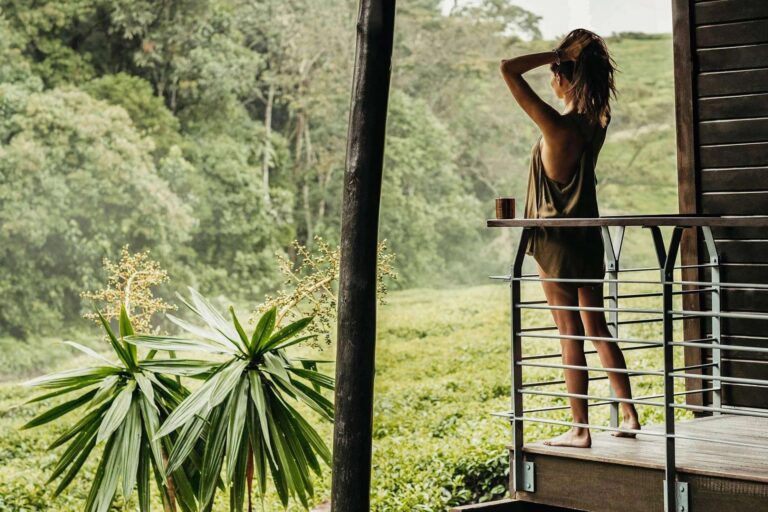
Sangare Tented Camp within a private conservancy adjacent to the Aberdare National Park provides an intimate, exclusive tented camp experience of considerable quality in a wildlife-rich landscape that serves as a natural extension of the national park ecosystem, with excellent game drives, walking safaris, and the kind of personalized, attentive hospitality that distinguishes the finest small-capacity camp experiences in Kenya.
How to get to Aberdare National Park.
Aberdare National Park is located approximately 150 kilometers north of Nairobi in the central Kenya highlands a journey of approximately two to two and a half hours by road through the Thika Superhighway and the well-maintained central highlands highway through Nyeri. The park’s main access points are the Mutubio Gate near Mweiga the main entrance for the Salient and the tree lodges and the Ruhuruini Gate on the park’s eastern boundary, both of which are accessible by standard saloon car on tarmac roads as far as the park boundary.
Nyeri the principal gateway town for the Aberdares, located approximately 15 kilometers from the Mutubio Gate is served by scheduled domestic flights from Wilson Airport in Nairobi to Nyeri Airstrip, with a flight time of approximately 30 minutes that provides the most time-efficient access for visitors combining an Aberdare visit with other central Kenya destinations. Most lodge properties arrange private road transfers from Nairobi, Nyeri, and Nanyuki as an integral part of their guest arrival services, and coordinating transfers through your chosen accommodation is the most convenient and reliable approach to reaching the park.
Aberdare National Park is a highland safari destination of quiet, consistent, and deeply satisfying excellence a place that operates on its own terms, rewards its own kind of attention, and delivers wildlife encounters of such intimacy and personal resonance that travelers who experience it return with a particular kind of affection for a park that never shouts about what it offers, but simply, reliably, and magnificently delivers it.