
Are Kenya Safaris Good for Photographers?
There is a question that every serious wildlife photographer asks before committing to a major safari destination and it is not merely whether the wildlife is present but whether the conditions, the light, the habitat, and the guiding infrastructure combine to create photographic opportunities of genuine artistic quality and personal significance. For Kenya, the answer is one of the most unambiguous and most enthusiastically delivered in the entire East African safari conversation. Kenya is not merely good for wildlife photographers it is, by the considered judgment of the world’s finest professional wildlife photographers, one of the greatest photographic destinations on Earth.
The Light: Kenya’s Most Extraordinary Photographic Gift.
Every serious wildlife photographer understands that the quality of natural light determines the quality of the image more fundamentally than any other single variable and Kenya’s equatorial light, particularly in the dry season months of June through October and January through March, delivers photographic conditions of such extraordinary natural beauty that professional photographers return to it year after year with the particular excitement of people who know exactly what is waiting for them and cannot wait to experience it again.
The golden hour light of the Masai Mara and Amboseli the warm, directional, low-angle illumination of the first two hours after sunrise and the last two hours before sunset transforms the East African savanna into a photographic environment of such concentrated visual magnificence that even technically modest images produced in these conditions carry an emotional power and a natural beauty that studio lighting cannot manufacture and post-processing cannot replicate. Lions in the first golden light of a Mara morning, elephants silhouetted against a Kilimanjaro sunset, and cheetahs scanning the plain from a termite mound in the warm horizontal light of the late afternoon these are the images that Kenya produces with a frequency and a consistency that makes it the most photographically generous safari destination in Africa.
The Open Vehicle Advantage.
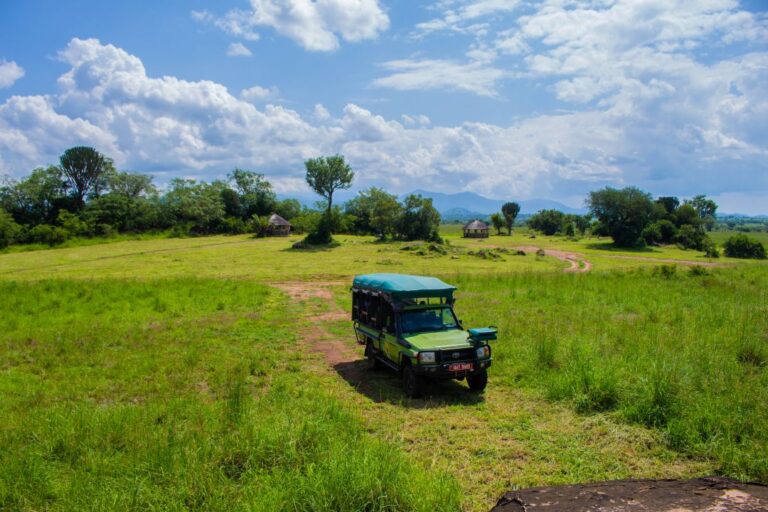
Kenya’s safari vehicles open-sided Land Cruisers and Land Rovers whose absence of windows and roof structures creates a completely unobstructed photographic field of view in every direction are among the most photography-friendly safari vehicles available anywhere in East Africa. The ability to position a telephoto lens at any angle, to follow the action of a cheetah hunt without a window frame cutting the composition, and to shoot at ground level from the vehicle’s low profile creates photographic freedom of outstanding practical value whose impact on image quality is immediate and significant.
The private vehicle hire option available across Kenya’s principal safari destinations including the Masai Mara, Amboseli, and Samburu amplifies the photographic advantage of the open vehicle by eliminating the group compromise that determines vehicle positioning in shared safari transport. A private vehicle positions itself precisely where the photographer needs it sun angle considered, background assessed, distance calibrated and stays there for as long as the photographic opportunity warrants without the social pressure of other passengers whose patience for stationary vehicle positions is finite and whose photographic objectives may differ fundamentally from those of the dedicated wildlife photographer sharing their vehicle.
Private Conservancies: Photography’s Greatest Kenya Opportunity.
The private conservancies surrounding the Masai Mara Ol Kinyei, Mara North, Naboisho, Olare Motorogi, and others deliver the finest wildlife photography conditions available in Kenya and among the finest available anywhere in Africa, combining vehicle exclusivity with off-road driving permission and night game drive access in a photographic environment of such comprehensive quality that professional photographers whose Kenya safari itineraries include conservancy accommodation consistently describe it as the most productive photographic investment available in the country.
Off-road driving permitted within the conservancies but prohibited in the national reserve allows vehicles to leave the established tracks and position themselves with complete freedom relative to wildlife subjects, sun angle, and background quality. The ability to drive to within optimal photographic distance of a specific subject, to position the vehicle with the light perfectly aligned, and to approach across open terrain without track constraints transforms the quality of wildlife photography from opportunistic to deliberate the difference between a record shot and a portfolio image.
Night game drives in the conservancies reveal a nocturnal photographic world of extraordinary visual interest and technical challenge leopards in the spotlight beam, servals hunting in the long grass, and the occasional extraordinary encounter with aardvark, porcupine, or civet whose nocturnal behavior creates photographic opportunities of such rare personal significance that the images produced carry a value and an exclusivity that daytime safari photography, however excellent, cannot replicate.
Amboseli: The Elephant Photographer’s Paradise.
Amboseli National Park deserves specific mention as the finest elephant photography destination in Africa a combination of large, closely observed elephant families, open short-grass terrain of exceptional visibility, and the incomparable visual backdrop of Mount Kilimanjaro rising 5,895 meters above the plains that creates a photographic environment of such concentrated natural magnificence that Amboseli images have appeared on the covers of the world’s finest nature photography publications with a frequency that no other single African destination approaches.
Amboseli elephants studied continuously since 1972 by the Amboseli Elephant Research Project are among the most relaxed and most closely approachable large elephants in Africa, their decades of positive human exposure creating a proximity tolerance that allows photographic approaches of outstanding intimacy and technical quality. Photographing a matriarch-led elephant herd crossing the Amboseli floodplain with Kilimanjaro glowing pink in the dawn light behind them is an experience of such concentrated photographic joy and natural magnificence that wildlife photographers who have achieved it consistently describe it as the single finest image opportunity of their entire African career.
Practical Photography Tips for Kenya Safari.
Bring a telephoto lens of at least 400mm the standard recommendation for serious Kenya wildlife photography whose open terrain and vehicle-based encounter distances create optimal working ranges for focal lengths between 300mm and 600mm. A 500mm or 600mm prime lens delivers the finest image quality at these distances, while a 100-400mm or 200-500mm zoom provides the versatility that the variable encounter distances of Kenya game drives practically demand.
Shoot in RAW format Kenya’s extraordinary light variation between golden hour and midday requires the post-processing flexibility that RAW files provide, allowing exposure recovery, color temperature adjustment, and shadow detail extraction whose combined effect on image quality is significant and practically important across the full range of lighting conditions encountered during a typical Kenya safari day.
Position yourself for the light before the subject arrives the finest Kenya wildlife photographs are made by photographers who think about light direction before wildlife proximity and who position their vehicle relative to the sun angle rather than simply driving to the nearest point of the wildlife encounter. The guide who understands the photographer’s light requirements and positions the vehicle accordingly is worth significantly more than the guide whose only metric of photographic success is the closeness of the approach.
Carry sufficient memory card and battery capacity for a full day Kenya’s most extraordinary photographic opportunities often occur during full-day game drives in the Masai Mara conservancies, and running out of storage or power during a cheetah hunt or a river crossing is a logistical failure whose personal cost is measured in images that cannot be recovered and moments that cannot be repeated.
Conclusion; Kenya safaris are outstanding for photographers at a level of consistent, reliable, and technically comprehensive photographic opportunity that places the country at the very apex of the world’s wildlife photography destinations. The light is extraordinary, the wildlife is abundant and accessible, the open vehicles and private conservancies create photographic freedom of outstanding practical value, and the professional guiding infrastructure that Kenya has developed over decades of international photography tourism delivers the field support, the local knowledge, and the genuine enthusiasm for the photographer’s specific objectives that transforms a good safari into a great photographic journey. Bring the best equipment you can carry, depart before dawn on every possible morning, and trust the Kenya light it will do the rest with a generosity, a beauty, and a consistent creative inspiration that no other wildlife destination in the world delivers with quite the same effortless, golden, permanently captivating magnificence. Contact our team for more information.