

Essential documentation requirements for gorilla trekking in Rwanda.
Tourism in Africa is dominated by Rwanda because of its reputation as an efficient and organized tourist destination. A visit to a highly protected national park within Rwanda to view an endangered species requires adhering to stringent regulations and having specific documentation. To prepare for your 2026/2027 gorilla trek, it is crucial to get your paperwork prepared as far in advance as possible. It is not only important to have the proper hiking gear; it is equally important to have the proper documentation, including but not limited to: a gorilla trekking permit, health certificates and a visa. This guide outlines everything you will need in straightforward terms.
1. Gorilla Trekking Permit for Rwanda.
The single most important piece of information that you will need to bring with you on your trip is your gorilla trekking permit. In Rwanda, the Rwanda Development Board (RDB) is the agency that manages gorilla permits.
Why it’s important: Gorilla permits are not the same as regular park entry fees. A gorilla permit is an advanced reservation for a specific date/time. On any given day, only 96 gorilla permits are issued per day for Volcanoes National Park (8 per each of the 12 habituated families). As of 2026, the cost of a gorilla permit for international visitors is $1,500 USD.
Important Note: You won’t receive a physical “ticket” through the postal service. When you book a trip, you usually get a digital confirmation of booking or e-Permit. When you book with a Tour Operator, they will keep your original confirmation for you, and when you arrive at the park headquarters on the day of your trip, they will present it to the park on your behalf. Just make sure to keep some form of a digital copy (or print out) with you in case there’s an issue. You’ll not be allowed in the park gate without your e-Permit regardless of how much you paid for flights and hotels.
2. A valid passport and identification.
Your gorilla trekking “permit” is assigned to you personally; that is, it is linked to your passport name and number. On the morning of your trekking adventure, you will be required to show the park headquarters (Kinigi) your Original Passport.
The rules: Your passport must be valid (not expired) at least 6 months after the date of entry (into) Rwanda. Additionally, there must be at least two blank pages in your passport for stamps. The park ranger is going to compare your passport against the manifest to verify that the permit is in fact yours. The park ranger will also confirm your age as the minimum age of 15 to trek gorillas. They will also verify your age, as the minimum age for gorilla trekking in Rwanda is 15 years old. Photocopies are generally not accepted at the park gate, so keep your original passport safe and accessible in your daypack.
3.Rwanda Entry Visa.
Travelers to Rwanda need to obtain a tourist visa unless they are coming from a country that doesn’t require a visa (like most countries within Africa or the Commonwealth).
Upon Entering Rwanda – (On Arrival): Rwanda offers entry visas on arrival for most nationals. A 30 day on-arrival tourist visa can be obtained for a fee of approximately $50 (USD) upon arrival at Kigali International Airport. The (E-Visa): Alternatively, an individual can apply for an electronic visa before they travel to Rwanda through the “Irembo” or “Migration” websites. This method will allow the traveler to save time waiting in a queue at the airport when they arrive. The East Africa Tourism Visa: If a traveler intends to visit Rwanda, Kenya and Uganda within one trip, a valid Visa for all three countries is more cost effective and convenient than obtaining a separate visa for each of the three countries.
4. Yellow Fever Vaccination Certificate.
Another item that is often shocking for a lot of travelers to Rwanda is the requirement to have a Yellow Fever Certificate “Yellow Card”. Rwanda is very strict regarding traveler health safety.
When you travel directly from the U.S. and Europe, it is unlikely that you will be required to produce proof of vaccination. However, if you are arriving from a Yellow Fever risk area, such as Uganda, Kenya, and Ethiopia, proof of vaccination will be required. Travelers frequently book a safari in either Uganda or Kenya before heading on to Rwanda and will need the yellow card before entering Rwanda. If someone cannot produce the yellow card upon entry to the border or the airport, that person may be denied entry or forcibly vaccinated on the spot.
5. Travel and Health Insurance
The park rangers at the entrance to the park do not request any health insurance documentation; however, both the operators that bring tourists into the park and the government strongly recommend that all tourists obtain this coverage.
The Reason: Gorilla trekking occurs at high altitudes on difficult terrain. If there were a medical emergency or accident in the forest during your trek, getting specialized medical assistance or being evacuated from the forest would cost substantially. Tourists should have a medical insurance company that covers “High-Altitude Trekking” and “Emergency Medical Evacuation” and carry a printed copy of their policy and the emergency phone number (24 hours) in their backpack.
6.The Gorilla Safety and Health Declaration Rules.
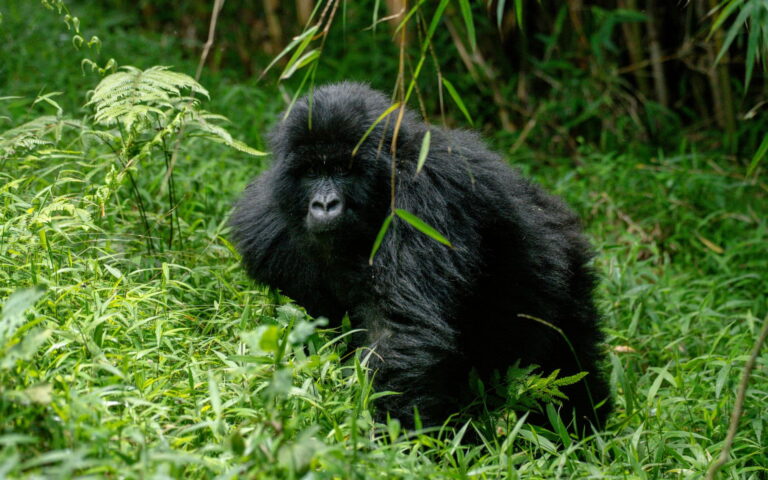
Mountain gorillas have 98% of the same DNA as humans, and they are extremely vulnerable to diseases transmitted from humans. The ranger will ask you to complete this document prior to starting your trek.
This document serves as a guarantee from you that you are not suffering from any cold or flu symptoms, diarrhea, or any other contagious disease at the time of your trek. Furthermore, if the ranger believes that you appear to be ill, they can deny you access to the trek due to the possible risk to the gorillas. You will sign this document upon arrival at the trekking site and will be required to comply with all Gorilla Safety Regulations, such as staying ten meters from the gorillas.
What to Bring for Your Rwanda Safari.
Before leaving for the airport, make sure that you bring with you the following items in your “Safari Folder”:
Original Passport (must be at least 6 months in date).
Gorilla Permit Confirmation (digital or printout).
Yellow Fever Vaccination Card (required for all travelers coming from surrounding countries).
Visa (if you applied online).
Travel Insurance Policy (with emergency contact information).
Recommended Option: Proof of COVID-19 Vaccination (keep a copy).
Iin conclusion insuring that you have all of your documents organized means that when you visit the “Land of a Thousand Hills,” you will be able to relax while enjoying yourself. You can expect that every aspect of your experience in Rwanda will be very well organized. If you arrive with the necessary documents, you will be through the administrative portion of your trip in less than five minutes so you can begin your exciting adventure, the opportunity to see mountain gorillas.