


How Early Should You Book a Kenya Safari?
How early should you book a Kenya safari is a planning question that every Kenya safari traveler faces at the beginning of the itinerary process and it is one whose honest, specific, and personally useful answer makes a genuine, practical difference to the quality, the availability, and the overall success of the safari experience that results from the booking decisions made in its wake. How early should you book a Kenya safari? The answer depends on several variables the specific destination, the season, the accommodation standard, and the specific activities involved but the overarching principle that governs all of them is simple, consistent, and entirely reliable: earlier is always better, and the traveler who books a Kenya safari with the greatest possible advance lead time consistently secures better accommodation options, better availability at peak season dates, better pricing, and the personal confidence of a fully confirmed itinerary whose logistics are managed with the unhurried care that last-minute booking pressure consistently prevents.
Peak Season: Book 9 to 12 Months in Advance.
The Great Migration river crossing season July through October is Kenya’s most internationally sought-after safari period, and the accommodation availability at the finest Masai Mara private conservancy camps during these months operates on a supply-demand dynamic of considerable scarcity whose practical consequence for the traveler who books late is the consistent unavailability of the specific properties, specific dates, and specific room categories whose combination creates the Migration safari experience of genuinely exceptional personal quality.
The finest private conservancy camps surrounding the Masai Mara accommodations like Singita Mara River Tented Camp, Mahali Mzuri, Angama Mara, and Rekero Camp operate with small capacities of between eight and twenty guests whose limited room inventory sells out for peak Migration dates nine to twelve months in advance among the repeat visitor community, specialist operator allocation blocks, and the international travel market whose knowledge of these properties’ quality creates booking competition of considerable intensity. The traveler who approaches these properties with a six-month lead time for August or September dates will consistently encounter full availability at their first-choice properties and the disappointment of settling for second-choice accommodation whose location, guiding quality, or conservation positioning delivers a meaningfully inferior Migration experience is entirely preventable with adequate advance booking.
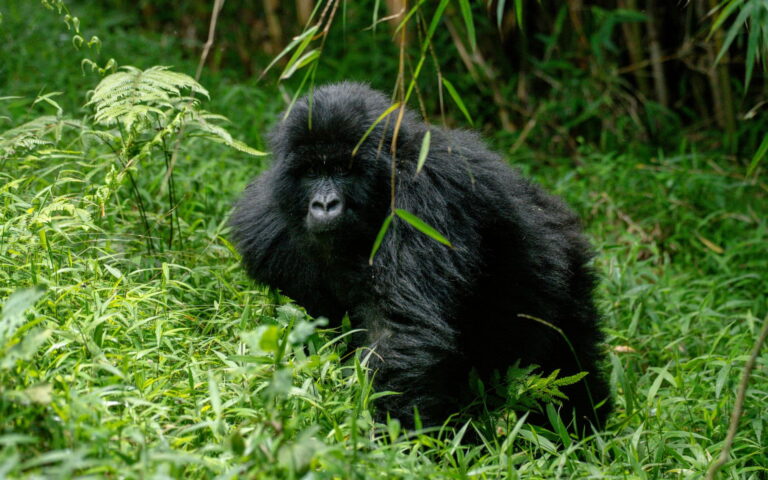
Gorilla trekking permits for travelers combining a Kenya safari with Uganda or Rwanda gorilla encounters require booking six to twelve months in advance during peak season, with the Uganda Wildlife Authority and Rwanda Development Board’s daily permit limits creating a scarcity that rewards early booking with confirmed peak season dates and punishes late booking with unavailability whose logistical consequences cascade through the entire combined itinerary.
Shoulder Season: Book 6 to 9 Months in Advance.
The shoulder season months of June, November, and the January through March dry season deliver excellent Kenya wildlife experiences with moderately reduced visitor numbers and the accommodation booking timeline for these periods, while less urgently compressed than the peak Migration experience, still rewards advance planning with availability and pricing advantages of genuine personal and financial significance.
Quality private conservancy accommodation in the Masai Mara and Laikipia retains high demand across the shoulder season months among the experienced safari traveler community whose knowledge of these periods’ wildlife quality and reduced crowding creates booking competition that the casual traveler who assumes abundant last-minute availability consistently underestimates. A six to nine month advance booking timeline for shoulder season travel provides the availability security and the accommodation choice that the most personally rewarding Kenya safari experience requires without the urgent twelve-month lead time that peak season demands.
Specialist safari operators like WildApes Safaris whose allocation blocks at the finest Kenya properties are confirmed and paid for months in advance of the travel season represent the most practically reliable booking channel for shoulder season Kenya safari travel, providing access to accommodation availability whose confirmation through the specialist operator’s established property relationships frequently exceeds what direct booking channels can deliver for the same dates at comparable or superior pricing.
Low Season: Book 3 to 6 Months in Advance.
The long rains of April and May represent Kenya’s genuine low season the period of reduced visitor numbers, competitive accommodation rates, and the wildlife and landscape rewards that the traveler with flexible timing and realistic seasonal expectations finds genuinely rewarding. Low season accommodation availability is considerably less constrained than the peak and shoulder season equivalents, and a three to six month advance booking timeline provides adequate lead time for the majority of Kenya’s safari destinations and accommodation categories during this period.
The financial advantages of low season booking accommodation rate reductions of 20 to 40 percent compared to peak season rates, reduced domestic flight costs, and the competitive pricing that operators extend to the flexible traveler whose willingness to visit in the less popular months represents a valuable commercial opportunity create a financial incentive for advance low season planning whose returns are most fully realized when the booking is made sufficiently early to access the early-booking rate structures that many Kenya lodges apply to their low season inventory.
What Happens When You Book Late.
The consequences of late Kenya safari booking defined as approaching the market within three months of the intended travel dates for peak season and within six weeks for shoulder season range from the manageable inconvenience of second-choice accommodation to the genuinely significant experience compromise of unavailability at the specific conservancies, specific properties, and specific dates that the most personally rewarding Kenya safari requires.
Peak season late booking creates the most serious availability consequences the finest Masai Mara conservancy camps fully committed, the best Migration-positioned properties unavailable, and the remaining inventory consisting of larger, less exclusive, and less wildlife-productively positioned alternatives whose experience quality, however adequate, falls meaningfully short of the private conservancy standard that the Kenya safari market’s finest properties deliver and that adequate advance planning makes accessible to any traveler willing to commit early enough to secure them.
Domestic flight availability on the popular Nairobi to Masai Mara routes operated by Safarilink and AirKenya can become constrained during peak season when advance booking of both accommodation and connecting flights is delayed, creating transfer logistics complications whose resolution requires either flexible date adjustment or the more expensive private charter alternative that last-minute availability problems consistently make the only practical option.
Practical Booking Recommendations.
Start planning twelve months ahead for peak season Migration travel the gold standard lead time whose application to the finest Masai Mara conservancy camps provides the broadest possible availability, the most personally appropriate property selection, and the logistical confidence of a fully confirmed itinerary whose components are assembled with the care and the unhurried attention that the most rewarding Kenya safari experiences deserve.
Engage a specialist safari operator early the most practically effective and most personally reliable approach to Kenya safari booking whose operator’s established relationships, allocation blocks, and destination knowledge provide access to availability, pricing, and logistical management that direct booking channels cannot match with equal consistency or equal quality of personal service.
Be flexible with specific dates the traveler whose peak season Kenya safari ambitions can accommodate a three to five day flexibility in specific travel dates consistently finds better availability, better pricing, and better property selection than the traveler whose date requirements are fixed and whose late booking timeline restricts the market’s ability to accommodate them at the quality level their safari objectives require.
Book accommodation and flights simultaneously the integrated booking approach whose confirmation of both the accommodation dates and the connecting domestic flight availability prevents the itinerary mismatch that sequential booking occasionally produces when the accommodation is confirmed for dates whose domestic flight connections have sold out in the intervening period between the accommodation booking and the flight reservation.
Conclusion; Book a Kenya safari as early as possible twelve months ahead for peak season Migration travel, six to nine months for shoulder season, and three to six months for low season through a specialist safari operator whose destination knowledge, property relationships, and logistical expertise transform the advance booking investment into the most personally rewarding, most comprehensively confirmed, and most completely satisfying Kenya safari experience that the extraordinary destination and its magnificent wildlife genuinely and completely deserve.