
How many gorillas’ families are in Rwanda.
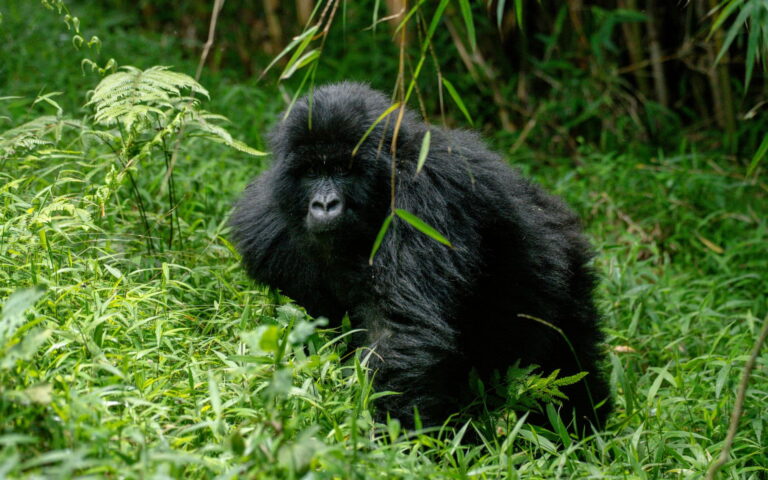
When you prepare for a gorilla trekking safari in Rwanda, you are not just going to see ‘’gorillas’’ in a general sense; you are going to visit a specific family unit. As of 2026, there are approximately 12 habituated gorilla families available for tourism in Volcanoes National Park. ’’Habituated’’ means these specific groups have undergone along process often lasting two to three years where they have become accustomed to the presence of the humans without changing their natural behaviour. While there are many more wild families living deep in the forest, there 12 groups are the only ones that the Rwanda Development Board (RBD) allows tourists to visit. Each family has its own unique story, personality, and then leadership style making the trekking safari experience difference for every visitor.
1.The structure of a Gorilla Family.
To understand the different groups, it is helpful to know a gorilla family is structured. A typical family is led by a silverback a mature male at least 12 years old, names for its distinctive patch of silver hair on his back. He acts as the protector the navigator, and then the ultimate decision maker for the group.
In addition to the leading Silverback, a family usually consists of the several adult females, blackbacks (younger males), juveniles and then infants. Some Rwandan families are ‘’monogamous,’’ with only one Silverback, while others are ‘’multi-male’’ groups with the several Silverbacks living together. The size of these families can range from small groups of 7 or 8 members to the massive ‘’Super groups’’ with over 30 individuals. Because the gorillas are wild animals, these numbers change frequently due to the births, natural deaths, or ‘’family splits’’ where a younger male leaves to start his own group.
2. The Susa Group (Susa A): the Historic Legends.
Perhaps the most famous family in Rwanda is the Susa Group, often referred to as Susa A. this was the group originally studies by the pioneering researcher Dian Fossey in the 1960s and 70s.
The Susa Group became legendary for its size; at one point, it reached over 40 members, making it ne of the largest mountain gorilla families ever recorded. Today, it remains a sizable and then impressive group. Oe of its most famous features was the presence of the rare set of twins. ‘’Byishimo’’’and ‘’Impano’’ which is an extremely rare occurrence in the gorilla world. This family usually lives high on the slopes of Mount Karisimbi, meaning that trekking to see them is often the most physically demanding hike in the park. However, for those who reach them the reward is then deep connection to the history of the gorilla conservation.
3.The Sabinyo Group: Accessibility and Leadership.
The Sabyinyo Group is frequently requested by the travellers who prefer a slightly less tiresome trek. This family is named after Mount Sabinyo, one of the volcanoes in the Virunga range, an they often in the bamboo forests on the lower slopes of the park.
For many years, this group was led by the ‘’Guhonda’’ the largest and then heaviest Silverback ever recorded in the park. He was a fierce protector and a very calm leader. Even after Guhonda’s retirement and then eventual passing the group has remained stable. Because they often stay near the park boundary, the hike to find them can sometimes takas as little as 45 minutes to an hour. This makes the Sabinyo Group a favourite for older trekkers or those who want to increase their time observing the gorillas rather than hiking for many hours.
4.The Amahoro and Umubano Groups: A story of peace.
The story of the Amahoro and Umubano groups is a fascinating look at gorilla social dynamics. ’’Amahoro’’ means ‘’Peace’’ in Kinyarwanda, and the group lives up to its name. the leading Silverback, Ubumwe is known for being exceptionally gentle and then easy going.
Historically, the Umubano Group was actually part of the Amahoro family. Years ago, a silverback named Charles challenged Ubumwe for leadership. Instead of engaging in a violet fight, Charles eventually splits away with a few females to start his own family, which he names ‘’Umubano,’’ meaning ‘’Living Together’’ or ‘’Neighbourliness.’’ Both groups still live in the same general area and then maintain a surprisingly peaceful relationship. Seeing wither of these groups offers a wonderful look at the social bonds and then emotional intelligence of these primates.
5.The Agashya and Hirwa Groups: Growing families.
The Agashya group (also known as Group 13) is a testament to the power of a strong leader. Originally, this group had only 13 members. However, a silverback named Agashya challenged the former leader and then took over the entire family. The was so successful at attracting females from other groups that the family grew to over 25 members. He is known for being very protective; if he senses any threat, he will lead his entre family high up the volcano to safety.
The Hirwa Group is relatively new family that formed from members of the Sabyinyo and then Agashya groups. ‘’Hirwa’’ means ‘’Lucky one’’ and the group lived up to its name when its also welcomed a set of twins. This family is known for being very active and then playful, with many young juveniles who enjoy entertaining visitors with their tumbling and then climbing.
6.The others: Karisimbi, Bwenge and Titus.
Karisimbi (Susa B): This was a split from the original Susa group. They live very high on Mount Karisimbi and are the best suited for serious hikers.
Kwitonda: This family migrated from the Democratic Republic of Congo and decided to stay in Rwanda. Their names means ‘’Humble One.’’
Bwenge: This is formed in 2007; this group is mostly found on the slopes between Karisimbi and Bisoke.
Titus: This family is named after the legendary Silverback Titus, who was born during Dian Fossey’s research time and became one of the most successful males in history.
In conclusion: Which family will you see?
It is important to remember that you can not ‘’book’’ a specific gorilla family in advance. On the morning of your trek at the Kinigi headquarters, the park rangers will gather the 96 permit holders for that day. They will look at everyone’s age, fitness level, and preferences before deciding which group will visit which family.
If you are an avid hiker, you might be assigned to the Susa A or Karisimbi groups. If you prefer a shorter walk, you might be assigned to Sabinyo or Agashya. No matter which of the 12 families you are lucky enough to encounter, the experience remains the same, silent hour in the company of a wild family that has allowed us a small experience into their ancient and a beautiful world.