
What is the difference between Gorilla trekking and Gorilla habituation.
For travellers planning a primate safari to see the majestic mountain gorillas, the choice usually comes down to two distinct experiences: the standard/normal Gorilla Trekking or the specialised Gorilla Habituation Experience (GHE). While both involve hiking into the rainforest to observe gorillas, they differ dramatically in duration, cost, proximity to the animals, and the overall conservation objective. Understanding these differences is crucial for deciding which rare encounter is right for your adventure.
1.Duration of the Encounter (Time spent with Gorillas).
This is the most significant and then often deciding difference for travellers. The time allowed with the gorilla family is strictly controlled for the conservation purposes.
Gorilla trekking (the standard hour): standard trekking involves visiting a gorilla family that is already fully accustomed to the humans. Once your tracking team located the family, you are strictly limited to one hour (60 minutes) of observation time. This hour begins the moment you first sight the gorillas. While one hour sounds short, it is intensely focused and enough time to witness their feeding, grooming and social dynamics. This limitation is essential to reduce stress and then prevent disease transmission.
Gorilla Habituation (the full four hours): the GHE, currently offered only in Uganda’s Bwindi Impenetrable National Park is the opposite. It offers tourists a full four hours with the gorilla family once they are located. This significantly extended duration allows for a far deeper observation period. You spend time watching their challenging behaviours, such as infant play, construction of the new nests and longer feeding routines. It provides an immersive, half-day experience, making it much more than a viewing opportunity it is a study.
2.Status of the Gorilla Family (Habituation Level).
The status of the gorilla family you visit defines the nature of the encounter and the rules that must be followed.
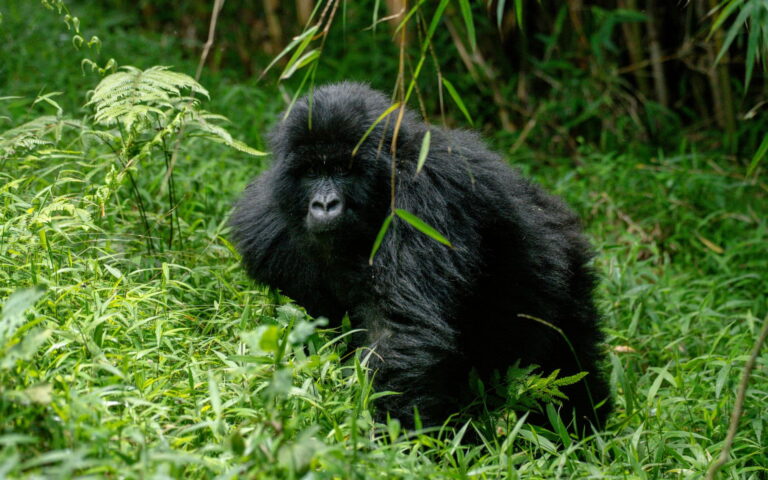
Trekking (Fully habituated): the families visited during standard trekking are fully habituated. This means they have been gradually introduced to human presence over approximately three years. They are relaxed, largely ignore human visitor, and then maintain their daily routines without being easily startled. This ensures a calm, predictable encounter.
Habituation (Semi-Habituated/Wild): Families in the GHE are still undergoing the habituation process. They are wilder, more nervous and less predictable. Tourists join the conservation teams that are slowly introducing themselves to the family. This means the gorillas might be shyer, might hide, or might react more actively to the presence of the observers. You are observing a scientific process, not just a viewing, making the experience rawer and more authentic.
3.Tourist Quota and Exclusivity (the Numbers).
The number of tourists allowed to participate reflects the sensitivity of the safari experience, with GHE being far more exclusive.
Trekking (higher volume): standard trekking allows eight tourists per habituated gorilla family per day. Because there are many habituated families in both Uganda and Rwanda, the overall daily quota is relatively high (like around 176 permits in Bwindi impenetrable national park). This makes permits easier to secure, although early booking is still essential.
Habituation (Extremely Low Volume): The GHE allows only four tourists per semi-habituated family per day. This extremely low number is necessary because the gorillas are still adapting and can not handle the presence of a larger crowd. Since the GHE is the only offered to one or two families at a time in Bwindi Impenetrable national park, the total daily number of the GHE permits available in the world is usually under ten.
4.Cost and Location.
The price and location of the permit are significantly different between the two options.
Trekking (cost effective and widespread)
Uganda Permit Cost: 800 USD.
Rwanda Permit Cost: 1500 USD.
Location: Available in all four sectors of Bwindi and then Mgahinga in Uganda, and throughout Volcanoes National Park.
Habituation (Premium price, single location).
Uganda GHE Permit Cost: 1500 USD.
Location: Gorilla Habituation Experience takes place only in the Rushaga sector of Bwindi Impenetrable Forest National Park, Uganda.
Cost Rationale: The Higher price covers the resources required for the specialized researchers and the full four-hour commitment, which is eight times the duration of standard trekking. The revenue generated also helps funds the multi-year habitation process itself.
Summary comparison Table.
| Feature | Standard Gorilla Trekking | Gorilla Habituation Experience (GHE) |
| Encounter time | Strictly 1 hour | 4 full hours |
| Group size | 8 tourists per family | Only 4 tourists per family |
| Gorilla status | Fully habituated (calm, ignores humans) | Semi-habituated (wilder, shy, still adapting) |
| Observation | Tourist viewing | Researcher/conservation observer |
| Cost (Uganda) | 800 USD | 1500 USD |
| Permit availability | Higher (easier to secure) | Extremely low (requires 12+ months booking) |
Best time to do gorilla trekking and gorilla habituation.
The best time to go for either Gorilla Trekking or the Gorilla Habitation Experience (GHE) is during the Dry seasons: June to September and December to February.
Why the dry season is best: during the dry season, rainfall is less thus, making the trails less muddy and slippery. Although the rainforests receive rain year-around, the dryer months offer easier, safer hiking conditions and slightly warmer weather. The vegetation is also less dense which can improve visibility for photography.
Wet season (Low season): March to May and October and November are the wet seasons. While the forest is lush and permits may be slightly easier to book, the trails are notoriously difficult, wet and challenging, often extending the trek duration. However, this is also the ‘’low season,’’ meaning fewer tourists overall. However, this is also the ‘’low season,’’ meaning the fewer tourists overall. For those prioritizing lower prices or extreme solitude, the low season is worth considering, providing you are prepared for the tiresome, muddy hiking.
In conclusion, the difference between gorilla trekking safari and then gorilla habitation are on your priorities. If your goal is a guaranteed, calm sighting at a more accessible price point, trekking is the best choice. If you are looking at an intimate, extended and then deeply wild experience and then are willing to pay the premium and then book far in advance, the Habituation Experience offers an unparalleled immersion into the life of the mountain gorilla and the crucial work being done to save it.